Hybrid Threats | Psychological Defence | Strategic Intelligence | Technology & Defence | Modern Warfare | Urban Warfare | Staff Rides | Wargames | China and the Indo-Pacific | the Balkans | Central Asia

Author: mikaelweissmann Page 2 of 6

Budapest Field Study: Urban Warfare, Military Innovation, and AI as a Training Tool

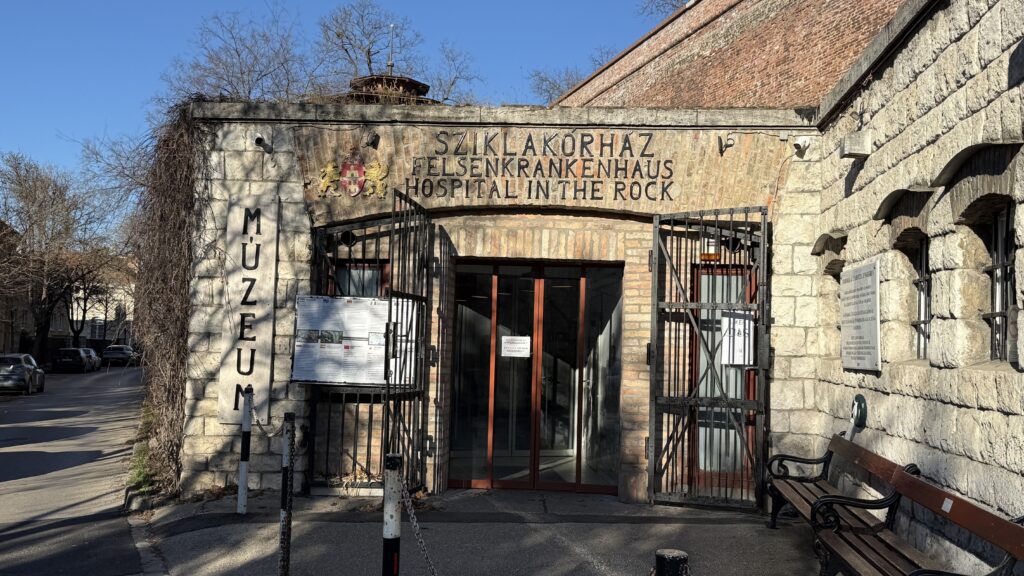
From 28–31 December 28–31, 2025, I conducted a field study in Budapest, focusing on urban warfare, military innovation, and the practical application of AI as a support tool for planning and conducting staff rides. The main historical anchor was the Siege of Budapest (1944 – 1945), using the city’s terrain and key sites to examine the realities of fighting in a major capital: constrained mobility, contested infrastructure, sustainment under pressure, and the constant tension between operational intent and street-level friction. I also briefly compared these lessons with the Hungarian Revolution of 1956 to highlight how rapidly urban dynamics can shift when legitimacy, information, and political control become central.

Alongside the historical cases, I conducted a pilot study on responsible ways of integrating AI into the planning and execution of staff rides—working with a range of sources including battlefield guides to structure the staff ride design (aims, stands, themes, and learning activities) and develop teaching tools that translate historical insights into focused questions and practical discussion prompts, while keeping human judgement and source criticism firmly in the loop. I also explored the possibility of using tailored “technique cards” at specific stands to cue observation, guide discussion, and support reflection during a staff ride.

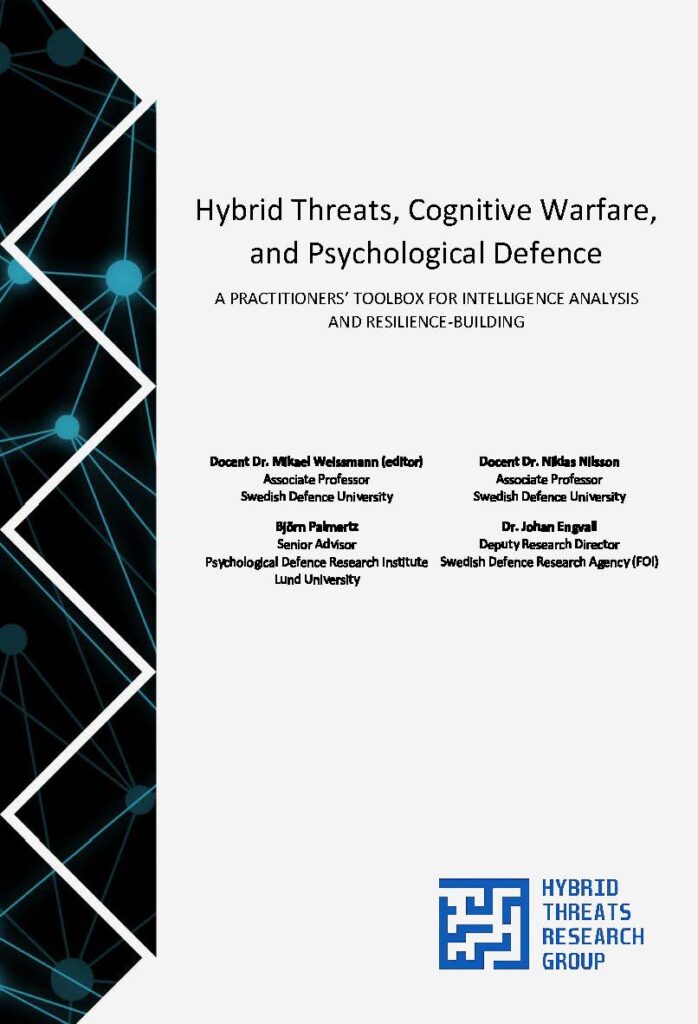
New publication: Hybrid Threats, Cognitive Warfare, and Psychological Defence

A new practitioners’ toolbox, Hybrid Threats, Cognitive Warfare, and Psychological Defence, has been published by the Hybrid Threats Research Group.

The toolbox consolidates key practitioner takeaways from five publications into a single, coherent framework for countering hybrid threats and cognitive warfare and for strengthening psychological defence and societal resilience. It links short-term threat–response cycles with long-term resilience-building and operationalises national-level psychological defence in a ready-to-use format.

The publication integrates three complementary analytical tools:

  • The hybridity blizzard model, illustrating how an aggressor’s targeting of vulnerabilities interacts with defensive responses over time and situating intelligence at the interface between detection, countermeasures, and resilience-building.
  • The intelligence analysis interaction (hourglass) model, capturing the coupled processes of analysis, aggregated and tailored communication, and reception and absorption among societal actors.
  • The assess–address–evaluate (AAE) framework, a six-dimensional structure guiding analysis, action, and learning for psychological defence and resilience.

Together, these tools provide practitioners with a practical workflow for diagnosing hybrid activity, improving intelligence interactions, and strengthening resilience through a coordinated whole-of-society approach.

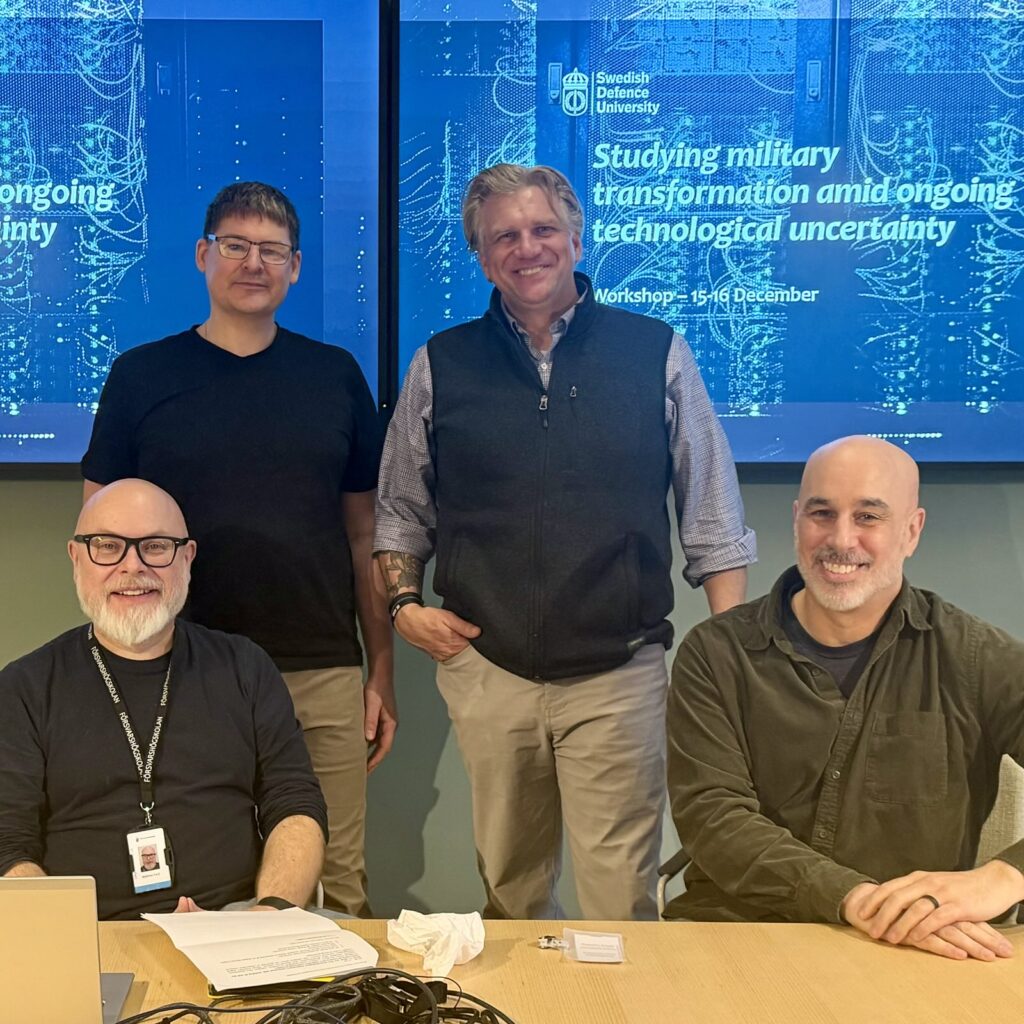
Workshop at the Swedish Defence University – Studying military transformation amid ongoing technological uncertainty (Stockholm, 15–16 December 2025)

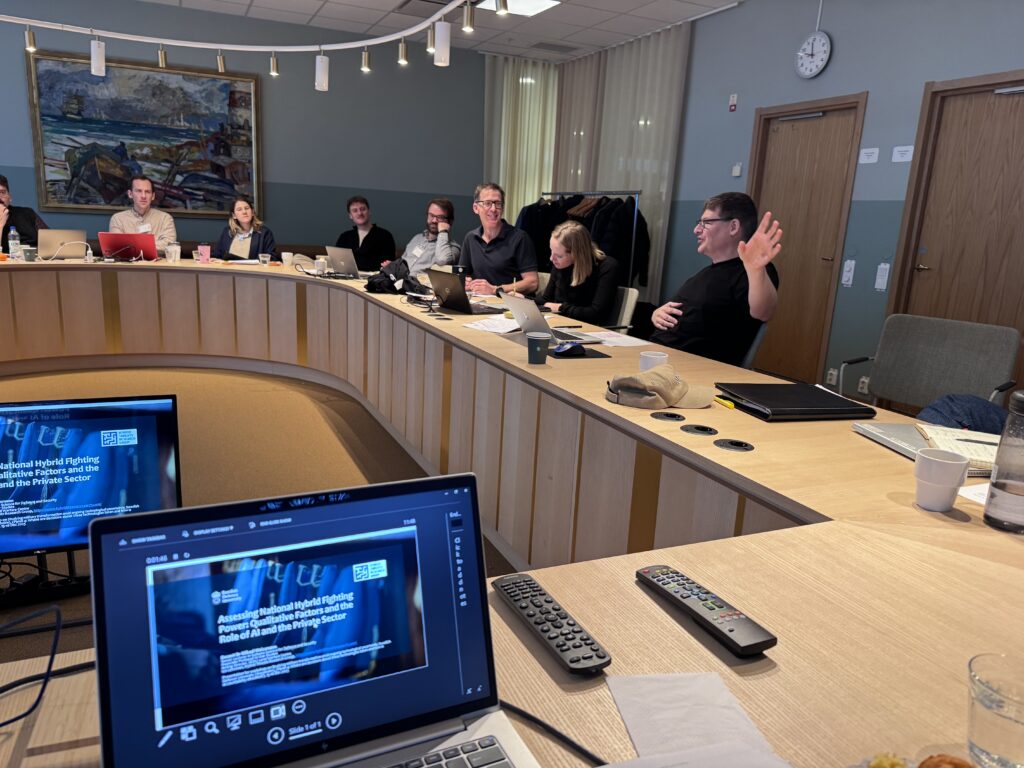
On 15–16 December 2025, I participated in a workshop at the Swedish Defence University on military transformation under conditions of sustained technological uncertainty.

I presented themes from an upcoming article, “Assessing National Hybrid Fighting Power: Qualitative Factors and the Role of AI and the Private Sector co-authored with Andrew Borne and Doug Livermore.

My presentation was based on a broader framework for assessing fighting power that combines traditional quantitative measures, with a specific focus on the role of public–private collaboration in strengthening these assessments.

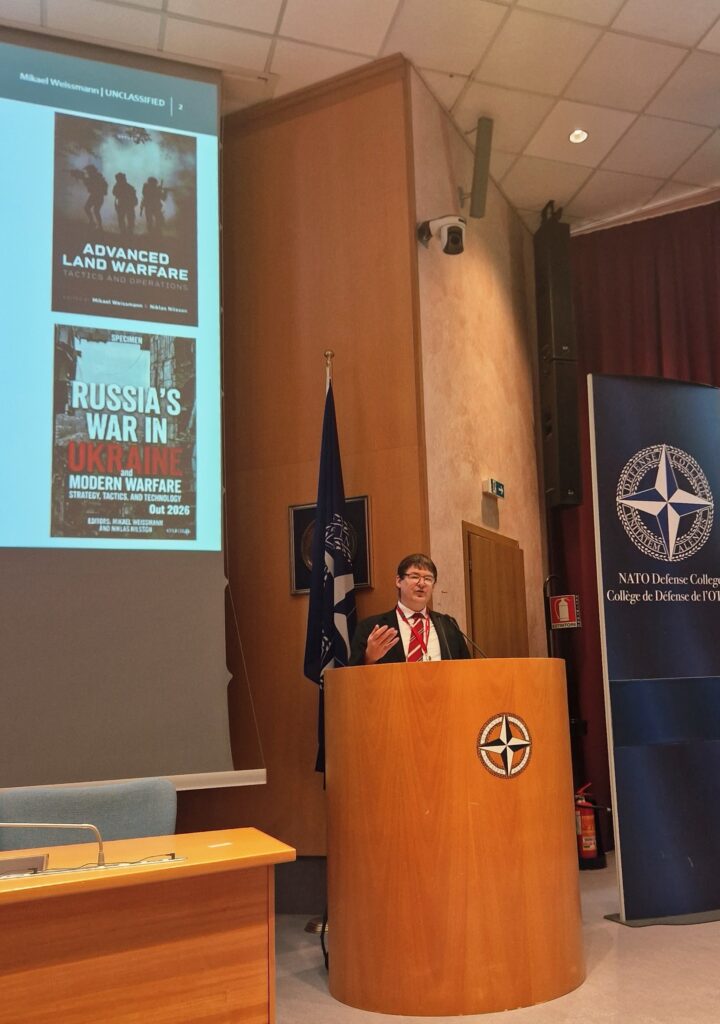
Lecture at NATO Defence College: The Changing Character of War

On 25 November 2025, I had the pleasure of giving a lecture at the NATO Defence College in Rome for the NATO Senior Course on “The changing character of war: Trends in the Land Warfighting Domain.”

The lecture addressed strategic trends in modern land warfare, new developments in land-domain techniques and technology, and NATO’s and its member states’ land warfighting capabilities.

Many thanks to the NATO Defence College for the invitation and for a very good discussion.

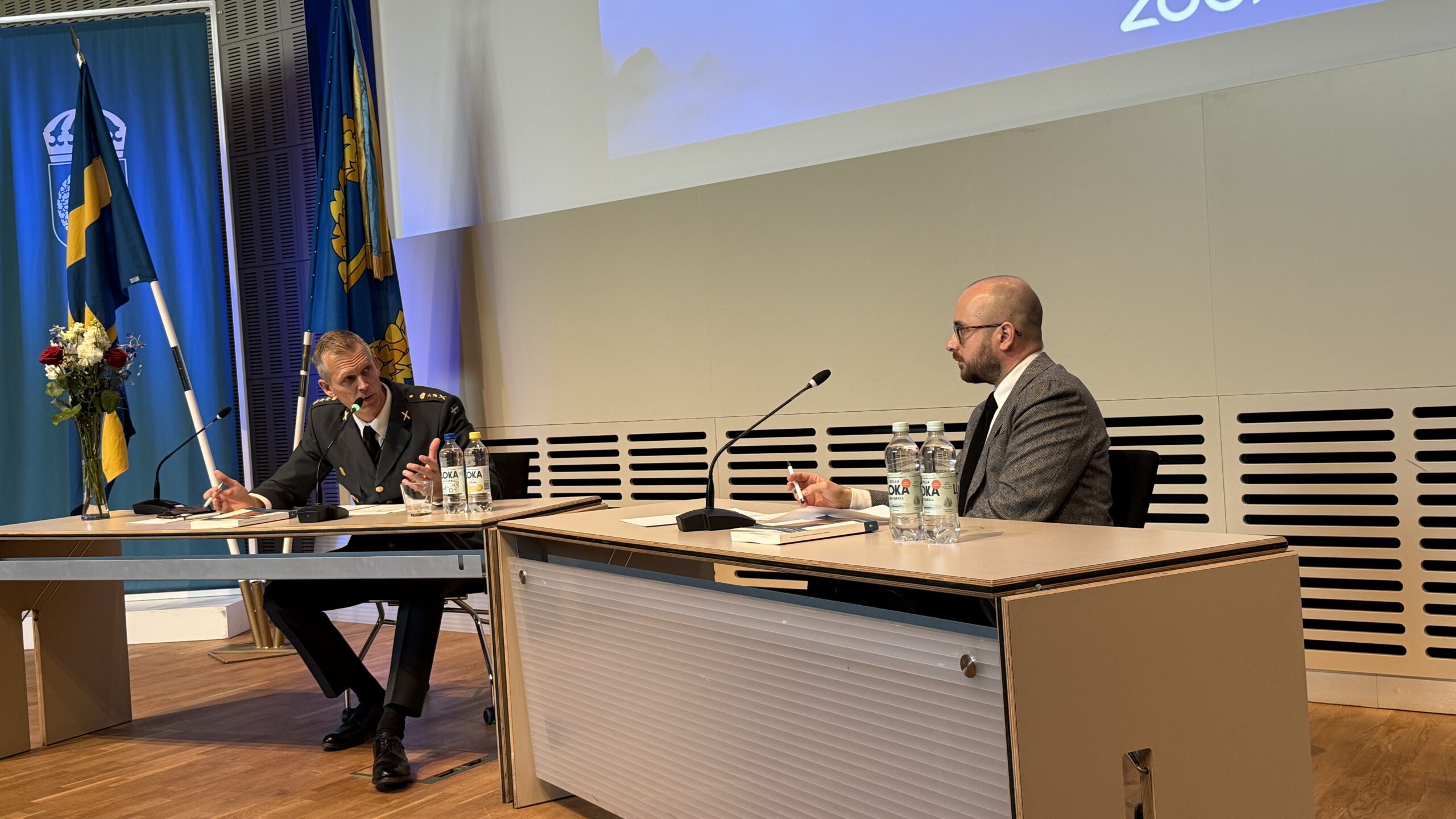
PhD Defence: Re-thinking Operational Depth — Col Dr Anders Ekholm

On 7 November 2025, my doctoral student Col Dr Anders Ekholm defended his PhD thesis in War Studies at the Swedish Defence University: From the Linear to the Circular: Re-thinking Operational Depth. I had the privilege of serving as main supervisor, together with Docent Niklas Nilsson.

The faculty opponent was Professor Olivier Schmitt professor and head of research at the Institute for Military Operations at the Royal Danish Defence College.

The thesis is an exploratory, concept-developing compilation study on Operational Art, focusing on Depth. Using Israel as a fieldwork-oriented case study, it examines how limited physical depth can be managed effectively and challenges the assumption that a lack of space inevitably leads to military defeat. It also broadens depth to include a cognitive dimension and develops a circular model for generating depth by leveraging existing resources.

Publication
Ekholm, Anders (2025). From the Linear to the Circular: Re-thinking Operational Depth.
👉 Thesis (PDF): https://www.diva-portal.org/smash/get/diva2:2006788/FULLTEXT01.pdf

Keywords (comma-separated)
operational art, operational depth, cognitive depth, operational design, manoeuvre theory, Israel, military theory, war studies

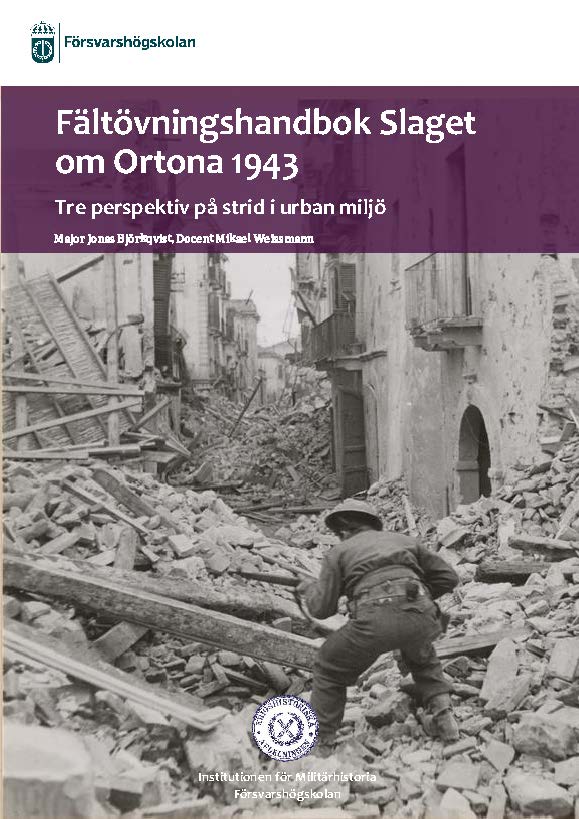
New Publication: Staff Ride Handbook – The Battle of Ortona 1943

By Major Jonas Björkqvist & Docent Dr Mikael Weissmann
Swedish Defence University Report Series 2025:6
DOWNLOAD | Open Access

This new handbook presents a comprehensive framework for conducting staff rides and field exercises on the Battle of Ortona (1943)—a historical case offering vital lessons for modern urban warfare. Combining history, wargaming, and pedagogy, it introduces a hybrid model linking tactical and operational insights from past battles with today’s and tomorrow’s conflicts.

Designed for Professional Military Education (PME), it provides practical guidance, thematic modules, and an integrated card-driven wargame to strengthen decision-making and leadership in complex urban operations.

Read the publication (Open Access): FULL TEXT

Conference on Psychological Defence – Lund, October 2025

I attended the Conference on Psychological Defence in Lund, Sweden (14–15 October 2025), hosted by the Psychological Defence Research Institute (PDRI) and the Swedish Psychological Defence Authority.
This year’s theme explored the intersection between research and policy, addressing resilience, threat intelligence, strategic communication, and deterrence in an evolving security landscape.

Read more: Exploring the Intersection of Research and Policy at the Conference on Psychological Defence

Expert Round Table on EU, China, and Central Asia

My presentation, “Resilience by Design: How Central Asia Keeps Agency between Brussels and Beijing without Choosing Sides,” highlighted findings on the hierarchy of needs for post-colonial states and introduced a three-layered model of resilience, developed in collaboration with Dr. Johan Engvall (Swedish Defence Research Agency). I also shared concrete policy recommendations on what Europe should—and should not—do in its approach to Central Asia.

New Role: Acting Director at the Swedish Defence University Land Warfare Centre

I am honoured to share that I have taken up the position of Acting Director of the Swedish Defence University Land Warfare Centre.

The Land Warfare Centre is a key part of the Swedish Defence University Institute for Warfare.

More updates to come as the work progresses.

Launching new website for the Hybrid Threat Resaerch Group (HTRG) – hybridthreatsresearch.com

The Hybrid Threats Research Group is an interdisciplinary initiative based at the Swedish Defence University, linking scholars and practitioners from political science, strategic communication, war and defence studies, cybersecurity, influence operations, intelligence, and area studies. Our mission is to advance the capacity to identify, analyse and respond to hybrid threats—where conventional and unconventional tactics converge to test social, political and technological resilience.

Guided by a steering group, and supported by a worldwide network of affiliates, we foster international collaboration to build knowledge that supports governments and key societal actors.

Our research focuses on five interconnected themes:

  1. Modern Warfare – examining how technological change reshapes conflict and defence strategy.
  2. Hybrid Threats – exploring the blended tactics of state and non-state actors that erode traditional defence mechanisms.
  3. Strategic Intelligence – strengthening the collection, analysis and application of intelligence to anticipate threats.
  4. Psychological Defence – building societal resilience against disinformation and influence operations across peace, crisis and war.
  5. Defence Systems – bridging social science and engineering to integrate technical and human factors in effective defence solutions.

Through targeted research projects, workshops and seminars, HTRG provides a creative environment for research training, professional development and evidence-based policy advice. We welcome collaboration with academia, government, and industry partners committed to understanding and countering the complex security challenges of today’s interconnected world.

The new website can be found here: https://www.hybridthreatsresearch.com

Page 2 of 6

Powered by WordPress & Theme by Anders Norén