Hybrid Threats | Psychological Defence | Strategic Intelligence | Technology & Defence | Modern Warfare | Urban Warfare | Staff Rides | Wargames | China and the Indo-Pacific | the Balkans | Central Asia

Category: Publication Page 1 of 2

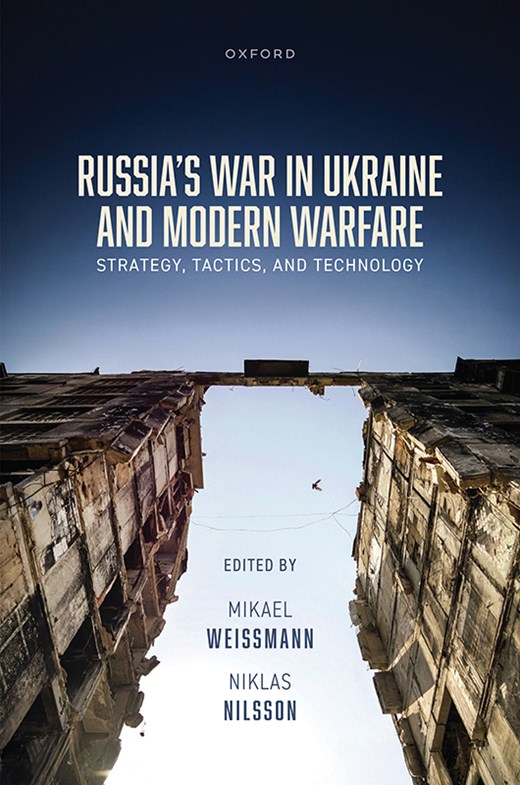
New Open Access Book: Russia’s War in Ukraine and Modern Warfare

I am delighted to announce the publication of Russia’s War in Ukraine and Modern Warfare: Strategy, Tactics, and Technology, co-edited with Dr Niklas Nilsson and published by Oxford University Press.

Russia’s war in Ukraine is a defining conflict of our time and a watershed in the evolution of modern warfare. It has challenged established assumptions about how wars are fought, sustained, commanded and understood. Our new volume brings together leading scholars and practitioners to examine what the war reveals about both the enduring nature and changing character of warfare.

The book combines thematic analysis with detailed case studies. Its chapters examine:

  • manoeuvre warfare and urban warfare;
  • mission command and command and control;
  • military logistics and health services;
  • air and maritime warfare;
  • force generation and military training;
  • intelligence collection and sharing;
  • drones and other emerging technologies;
  • military learning and adaptation;
  • gender and the Ukrainian armed forces; and
  • key phases of the war between 2014 and 2025.

The volume is structured around four parts: dimensions of modern warfare; organisation, technology and training; chronological case studies; and a concluding assessment of the wider lessons of the war.

In addition to co-editing the volume, I co-authored three chapters:

The book is published Open Access and can be read or downloaded free of charge through Oxford Academic.

Read and download the complete book

The print paperback edition will be published on 30 August 2026 and can be ordered from Oxford University Press.

Reference

Weissmann, Mikael and Niklas Nilsson, eds. Russia’s War in Ukraine and Modern Warfare: Strategy, Tactics, and Technology. Oxford: Oxford University Press, 2026.
https://doi.org/10.1093/9780198970903.001.0001

New article: Resilience by Design: How Kazakhstan and Uzbekistan Survive amid Great-Power Rivalry

Why have Kazakhstan and Uzbekistan proved more resilient than many expected amid Russia’s war against Ukraine and intensifying great-power rivalry?

In our new article in Survival, published by the International Institute for Strategic Studies (IISS), Dr Johan Engvall and I argue that this resilience is not accidental. It is resilience by design.

Resilience by Design: How Kazakhstan and Uzbekistan Survive amid Great-Power Rivalry identifies a sovereignty-first strategy built on three mutually reinforcing layers:

• domestic hardening
• regional consolidation
• multi-vector diplomacy

Rather than viewing Central Asian states primarily as passive objects of competition between Russia, China and the West, we show how Kazakhstan and Uzbekistan actively manage dependencies, diversify external relationships and expand their room for strategic manoeuvre.

The article is part of our broader research on hybrid threats, psychological defence and cognitive warfare, conducted through the Hybrid Threats Research Group, and contributes to the project Building Resilience and Psychological Defence: Countering Hybrid Threats and Foreign Influence and Interference, funded by the Swedish Psychological Defence Agency.

Read the article here:
https://www.tandfonline.com/doi/full/10.1080/00396338.2026.2704407

If you do not have access to the full text, send me a message and I will be happy to share an author ePrint link.

New Article: Fågel Fenix: Divisionens strid och taktik i en nutida operativ kontext

I am pleased to share a new article co-authored with Lt Col Dr Lars Henåker, published in Kungl. Krigsvetenskapsakademiens Tidskrift, the journal of The Royal Swedish Academy of War Sciences. The article appears in issue no. 1/2026, which is a theme issue focusing on the army.

In “Fågel Fenix: Divisionens strid och taktik i en nutida operativ kontext” [Phoenix Rising: Division-level Combat and Tactics in a Contemporary Operational Context], we examine the renewed relevance of the division as a command level in the Swedish Army. Against the background of Sweden’s NATO membership, the war in Ukraine, and the increasing complexity of contemporary land warfare, the article asks what the division adds beyond the brigade level and how it can be used in combat.

The article, written in Swedish, examines the renewed relevance of the division as a command level in the Swedish Army. Against the background of Sweden’s NATO membership, the war in Ukraine, and the increasing complexity of contemporary land warfare, we ask what the division adds beyond the brigade level and how it can be used in combat.

Drawing on observations from the Swedish Army Staff Exercise 2022 (ASÖ22), the article analyses division-level command and tactics through eight tactical elements: deployment, aggressive reconnaissance, manoeuvre, breakthrough, high tempo, surprise, shock, and organisational breakdown. We argue that the division has re-emerged as a critical level for coordinating brigades, enabling manoeuvre, sustaining combat power, and creating the conditions for decisive action in a complex operational environment.

Reference:
Henåker, Lars and Weissmann, Mikael, “Fågel Fenix: Divisionens strid och taktik i en nutida operativ kontext”, Kungliga Krigsvetenskapsakademiens Tidskrift, no. 1, 2026, pp. 52–75. Full text.

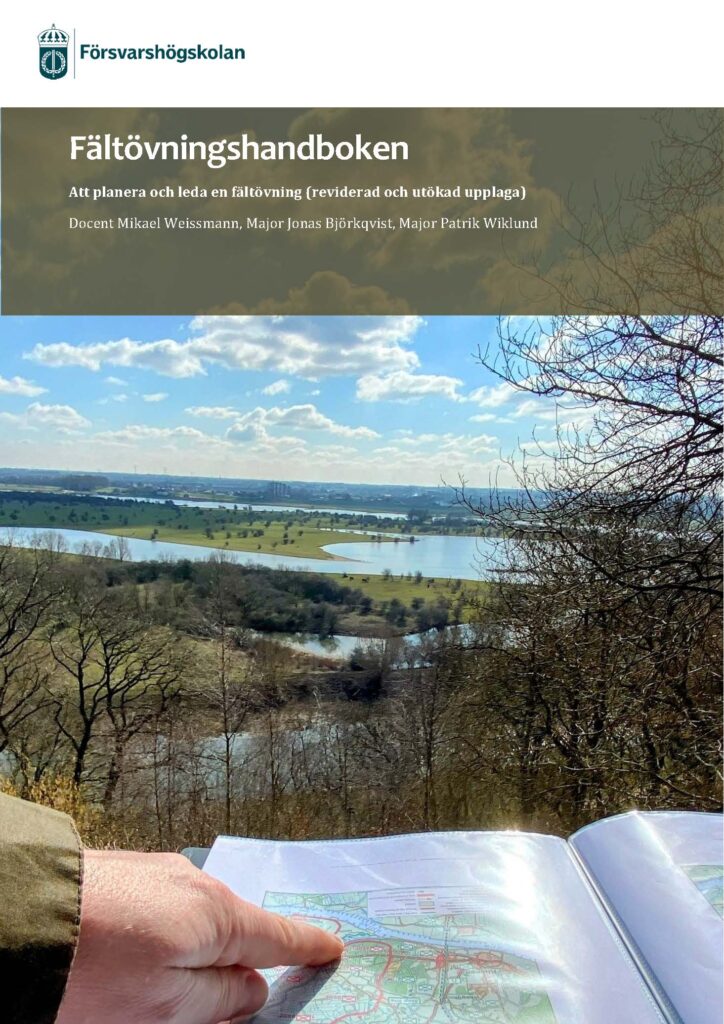
New publication: Fältövningshandboken: Att planera och leda en fältövning

I am pleased to share our new updated and expanded staff ride handbook, Fältövningshandboken: Att planera och leda en fältövning (2026, in Swedish), co-authored with Major Jonas Björkqvist and Major Patrik Wiklund.

The handbook explores field exercises as a central pedagogical tool in officer education. It brings together historical perspective, pedagogy, planning, and execution, and is structured in four modular parts covering:

  1. the field exercise as a method and learning tool,
  2. pedagogical design and constructive alignment,
  3. preparation and planning, and
  4. execution, including hybrid formats and the integration of wargaming.

The book is intended as a practical guide for planning and leading field exercises in professional military education, and for strengthening the link between educational objectives, historical cases, and applied military learning.

Availible as a pdf here: https://doi.org/10.62061/mcji4602/

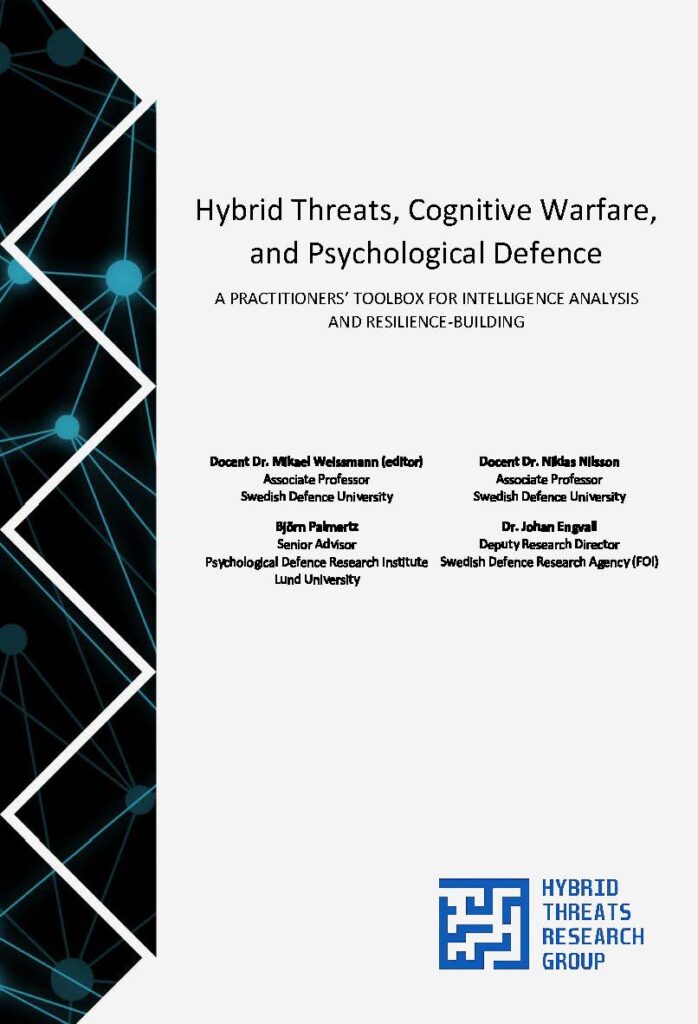
New publication: Hybrid Threats, Cognitive Warfare, and Psychological Defence

A new practitioners’ toolbox, Hybrid Threats, Cognitive Warfare, and Psychological Defence, has been published by the Hybrid Threats Research Group.

The toolbox consolidates key practitioner takeaways from five publications into a single, coherent framework for countering hybrid threats and cognitive warfare and for strengthening psychological defence and societal resilience. It links short-term threat–response cycles with long-term resilience-building and operationalises national-level psychological defence in a ready-to-use format.

The publication integrates three complementary analytical tools:

  • The hybridity blizzard model, illustrating how an aggressor’s targeting of vulnerabilities interacts with defensive responses over time and situating intelligence at the interface between detection, countermeasures, and resilience-building.
  • The intelligence analysis interaction (hourglass) model, capturing the coupled processes of analysis, aggregated and tailored communication, and reception and absorption among societal actors.
  • The assess–address–evaluate (AAE) framework, a six-dimensional structure guiding analysis, action, and learning for psychological defence and resilience.

Together, these tools provide practitioners with a practical workflow for diagnosing hybrid activity, improving intelligence interactions, and strengthening resilience through a coordinated whole-of-society approach.

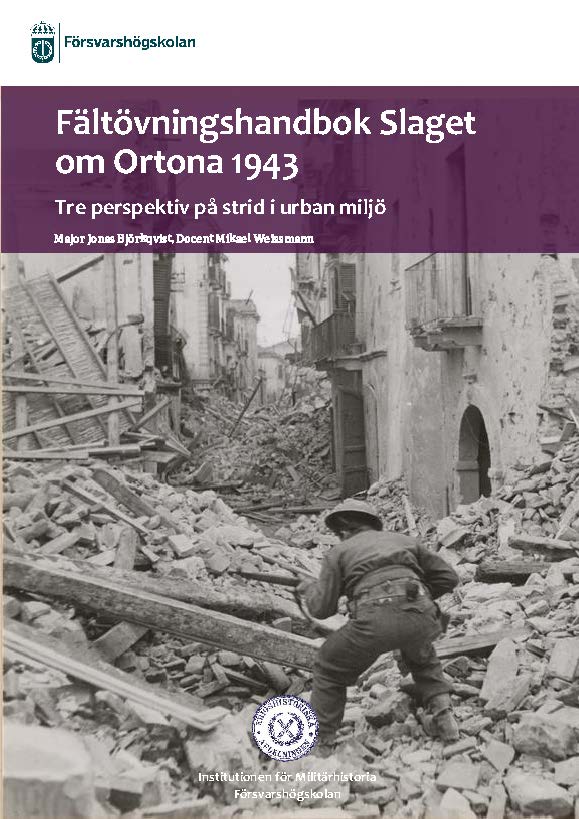
New Publication: Staff Ride Handbook – The Battle of Ortona 1943

By Major Jonas Björkqvist & Docent Dr Mikael Weissmann
Swedish Defence University Report Series 2025:6
DOWNLOAD | Open Access

This new handbook presents a comprehensive framework for conducting staff rides and field exercises on the Battle of Ortona (1943)—a historical case offering vital lessons for modern urban warfare. Combining history, wargaming, and pedagogy, it introduces a hybrid model linking tactical and operational insights from past battles with today’s and tomorrow’s conflicts.

Designed for Professional Military Education (PME), it provides practical guidance, thematic modules, and an integrated card-driven wargame to strengthen decision-making and leadership in complex urban operations.

Read the publication (Open Access): FULL TEXT

New Article Published: Staff Rides in Professional Military Education

A new article, co-authored with Major Jonas Björkqvist of the Swedish Defence University, has been published in Contemporary Military Challenges.
🔹 Title: Staff Rides in Professional Military Education: Fusing History, the Modern Battlefield, and the Battlefield of the Future
🔹 Journal: Contemporary Military Challenges
🔹 Keywords: Staff rides, war games, professional military education, battlefield study


Abstract
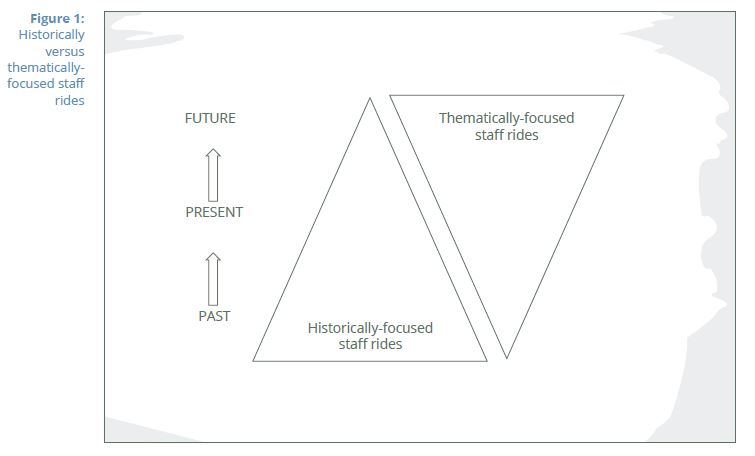
This article examines the critical role of staff rides in professional military education (PME), emphasizing their ability to bridge historical military events with modern and future operational realities. It introduces a structured hybrid staff ride model that ensures relevance for today’s military leaders.
Key Insights from the Study:
✔️ The Hybrid Model – A structured approach balancing historical analysis with contemporary and future operational demands.
✔️ Pedagogical Planning Model – A framework for designing staff rides that ensures learning objectives are aligned with practical field activities.
✔️ Integration of War Games – A fully merged model combining staff rides and war games to enhance decision-making and problem-solving skills.
✔️ Historical Personas for Deeper Engagement – Assigning historical figures to participants, helping them immerse themselves in battlefield decision-making.
✔️ Comparison of Staff Ride Models – A review of international approaches, providing valuable insights for PME institutions worldwide.
These insights reinforce staff rides as essential tools for developing critical thinking, decision-making, and leadership skills in military education.
📖 Read the full article here: https://doi.org/10.2478/cmc-2024-0028

New publication: Future Threat Landscapes: The Impact on Intelligence and Security Services

My latest article, “Future Threat Landscapes: The Impact on Intelligence and Security Services”, is now published in Security & Defence Quarterly!
This article examines the evolving nature of antagonistic threats in the context of intelligence and security services, with a focus on small and medium-sized countries. In an era where the line between war and peace is increasingly blurred, intelligence and security services face a rapidly evolving threat environment.

This article examines:

  • The rise of hybrid threats and non-linear warfare
  • The strategic role of AI and machine learning in modern security
  • How intelligence services must adapt to meet multi-domain challenges

As technology and geopolitics shift, resilience, adaptability, and international cooperation will be key to navigating these uncertainties.

Read the full article here: https://doi.org/10.35467/sdq/197248

#SecurityStudies #HybridThreats #Intelligence #AI #Defence #CyberSecurity #NationalSecurity

New Publication: Hybrid Threats and the Intelligence Community

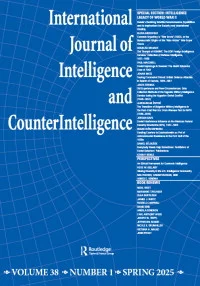
I am pleased to share our latest article, “Hybrid Threats and the Intelligence Community: Priming for a Volatile Age,” in International Journal for Intelligence and CounterIntelligence co-authored with Niklas Nilsson and Björn Palmertz.

In today’s complex security environment, the intelligence community must address dynamic hybrid threats through coordinated efforts that span multiple sectors. Our research emphasizes the critical interaction between intelligence analysis, communication, and societal resilience.

Key points include:
• The necessity of reciprocal engagement between intelligence actors and key societal stakeholders.
• An introduction of the Intelligence Analysis Interaction Model, which offers a framework for understanding how hybrid threats evolve and for fostering resilience across society.
• Recommendations on developing tools to identify vulnerabilities, build resilience, and formulate comprehensive whole-of-society responses to hybrid threats.

The full article can be accessed here: https://doi.org/10.1080/08850607.2024.2435265

New report on North Macedonia’s Response to Hybrid Threats and Malign Foreign Influence and Interference

I am excited to announce that our research project on “Building Resilience and Psychological Defence: Countering Hybrid Threats and Foreign Influence and Interference,” has just published a new report on North Macedonia’s Response to Hybrid Threats and Malign Foreign Influence and Interference in the Psychological Defence Research Institute‘s working paper series. It is authored by Professor Zhidas Daskalovski and Sasho Damjanovski from the Faculty of Security-Skopje, University St. Kliment Ohridski-Bitola, North Macedonia.

This report underscores the urgent need for resilience against hybrid threats in North Macedonia, especially as global security dynamics shift following the Russian military intervention in Ukraine. Utilizing our previously published framework, it offers in-depth analysis and proposes countermeasures through a holistic approach. Notably, it highlights societal polarization in the Western Balkans and how the intersecting interests of major powers heighten vulnerabilities to foreign interference.

Page 1 of 2

Powered by WordPress & Theme by Anders Norén