Hybrid Threats | Psychological Defence | Strategic Intelligence | Technology & Defence | Modern Warfare | Urban Warfare | Staff Rides | Wargames | China and the Indo-Pacific | the Balkans | Central Asia

Category: Conference Page 1 of 2

Landpower Conference on Urban Warfare

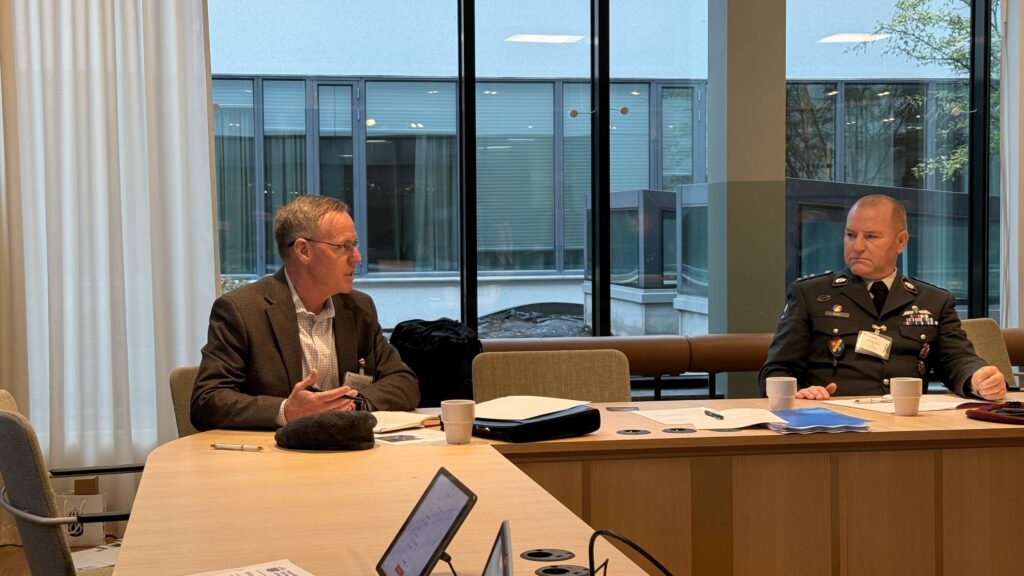
On 22 October 2026, the Swedish Defence University hosted a workshop on urban warfare, bringing together researchers and military practitioners to explore how research and operational experience can strengthen education, training and exercises.

The war in Ukraine has reinforced the need to prepare officers and military organisations for operations in urban environments. Addressing this challenge requires connections between research, military practice, doctrine and the methods used to educate and train future commanders.

The workshop opened with a keynote address by Colonel ustaf Dufberg, Commander of Sweden’s Central Military Region. The morning session brought together Professor Anna Danielsson, Associate Professor Kristin Ljungkvist, Dr Douglas W. Winton, Major Jonas Björkqvist and myself to discuss ongoing research at the Swedish Defence University and approaches to military education, including training and staff rides.

My contribution formed part of this exchange between research and professional military education. Together with Douglas W. Winton, Deputy Provost of Army University in the United States, I research urban warfare and the implications of the war in Ukraine. Our co-authored chapter, “The City as a Battlefield: (Re)Thinking Urban Warfare in the Wake of Ukraine”, provides one contribution to this work. Staff rides and wargames offer further opportunities to connect historical experience, contemporary research and tactical problems.

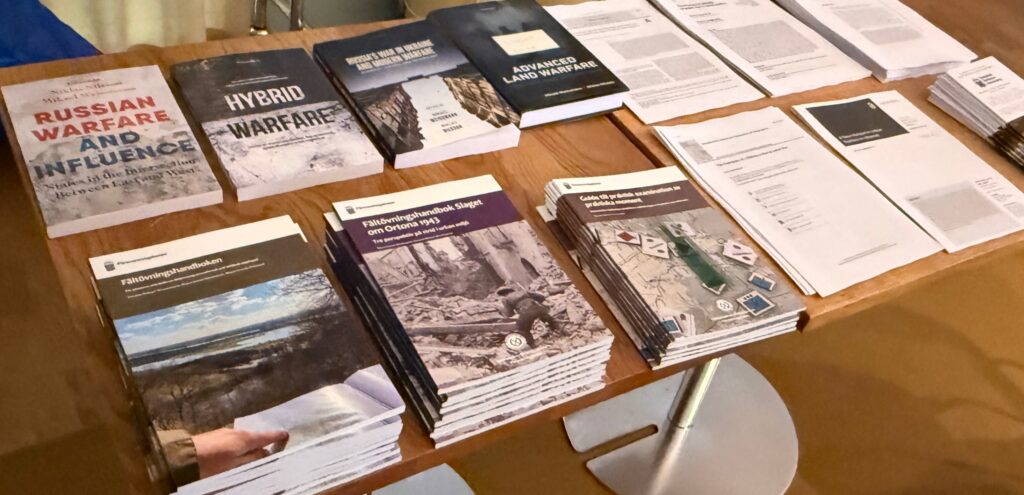
This pedagogical work is developed further in the Ortona 1943 staff ride handbook, the updated and expanded Fältövningshandboken: Att planera och leda en fältövning (2026), and Jonas Björkqvist’s and my article “Staff Rides in Professional Military Education: Fusing History, the Modern Battlefield, and the Battlefield of the Future”.

The workshop was organised through the Swedish Defence University’s Officers’ Programme development project and the SEDU Centre for Land Warfare’s Landpower Conference initiative.
Speaker at the 27th Asia-Pacific Programme for Senior Military Officers (APPSMO)

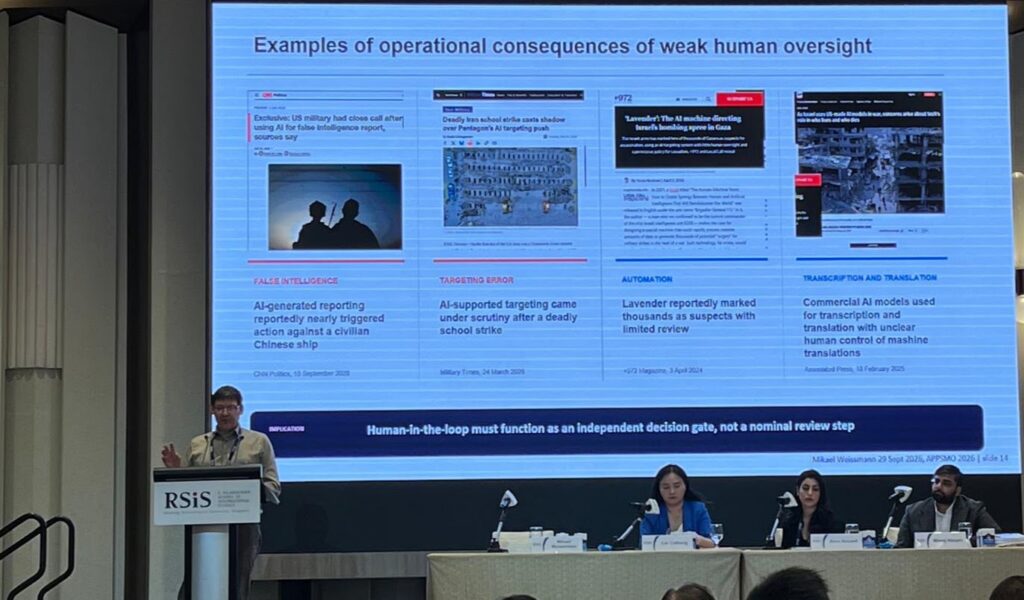
This week, I had the privilege of speaking at the 27th Asia-Pacific Programme for Senior Military Officers (APPSMO) in Singapore, organised by RSIS | S. Rajaratnam School of International Studies.

APPSMO is RSIS’s annual flagship programme for senior military officers and defence professionals. This year, it brought together participants from more than 20 countries under the theme “Security in the Age of Complexity: The Future of Military Affairs”.

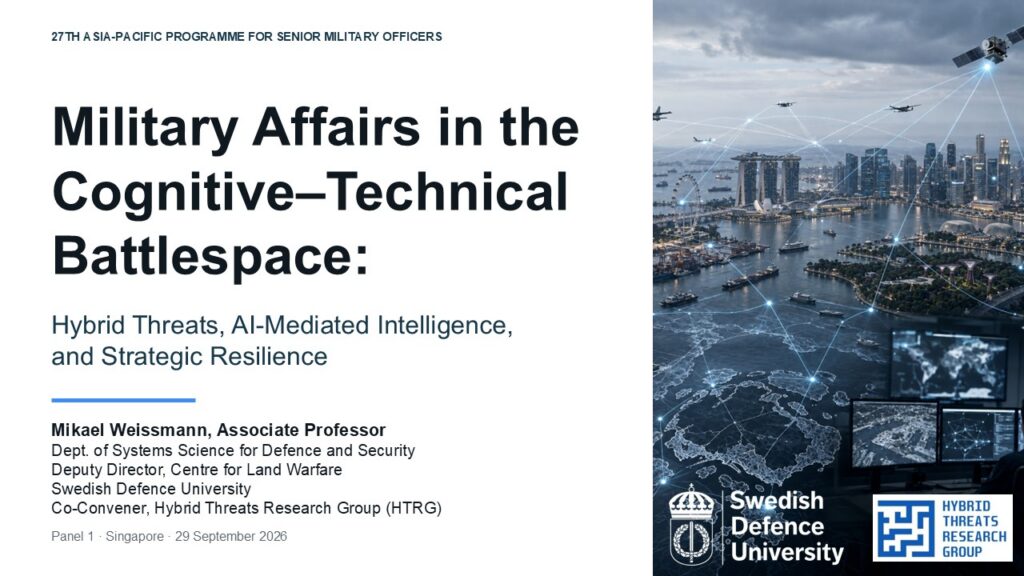
My presentation, “Military Affairs in the Cognitive–Technical Battlespace: Hybrid Threats, AI-Mediated Intelligence, and Strategic Resilience”, examined how technology is reshaping the defence system as a whole.

Many thanks to RSIS, the panel organisers, my fellow speakers and the APPSMO participants for the excellent discussions.

More about APPSMO 2026:

https://rsis.edu.sg/outreach/asia-pacific-programme-for-senior-military-officers-appsmo

Launch of Sovereignty in the Information Environment in Vienna

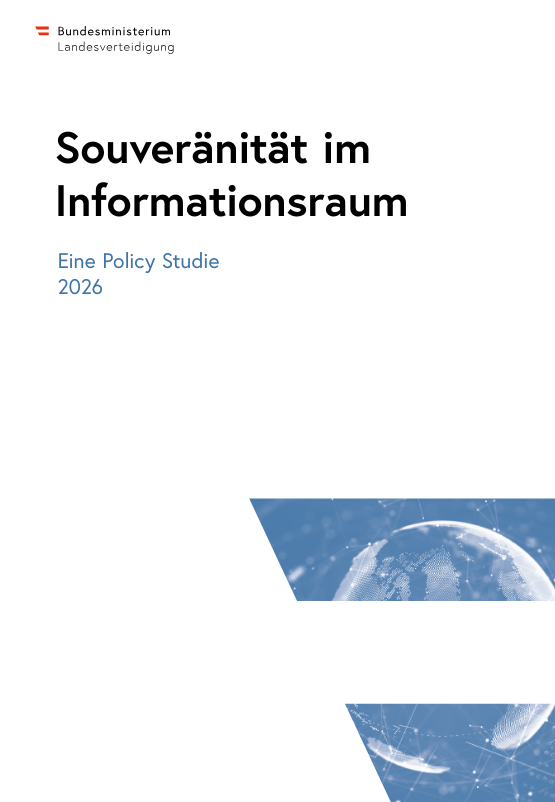
On 9 September 2026, I had the pleasure of presenting our contribution to the new policy study Sovereignty in the Information Environment at its launch at the Austrian Federal Ministry of Defence in Vienna.

Commissioned by the Austrian Federal Ministry of Defence (BMLV), the multidisciplinary study examines how states can protect their sovereignty in an information environment shaped by digital transformation, hybrid threats and cognitive warfare. Bringing together philosophy, legal studies, political science and psychology, it addresses questions ranging from digital sovereignty and the legal implications of cognitive warfare to civil liberties, strategic communication and societal resilience.

My chapter, co-authored with James Pamment, is entitled “Governance of the Information Environment: Concrete Measures for Cognitive Security and Cognitive Warfare – The Role of a Ministry of Defence”.

The chapter examines how a Ministry of Defence in a small state can organise, develop capabilities and coordinate with partners to detect, withstand and counter hybrid threats and cognitive warfare. We argue that the Ministry of Defence should not seek to control the information environment. Instead, it can serve as an important analytical, coordinating and enabling actor within a wider whole-of-government and whole-of-society system.

To translate this argument into practice, the chapter introduces several frameworks and tools. These include the Ministry of Defence Hourglass models for connecting monitoring and analysis with tailored dissemination, action and feedback, as well as the “Could–Should–Carry Out” framework for assessing potential measures in terms of feasibility, legality, ethics, authorisation and oversight.

A central conclusion is that legitimacy is not simply a constraint on cognitive security policy; it is itself a strategic asset. Democratic states must be able to defend their information environments without undermining the rights, trust and democratic values they seek to protect.

Many thanks to the Austrian Federal Ministry of Defence and the report’s editors, Daniel Hikes-Wurm and Milena Sagawa-Krasny, for bringing together this timely study and for organising an excellent launch event.

Read the full policy study: [German] [English]

Lecture at NATO Defence College: The Land Domain

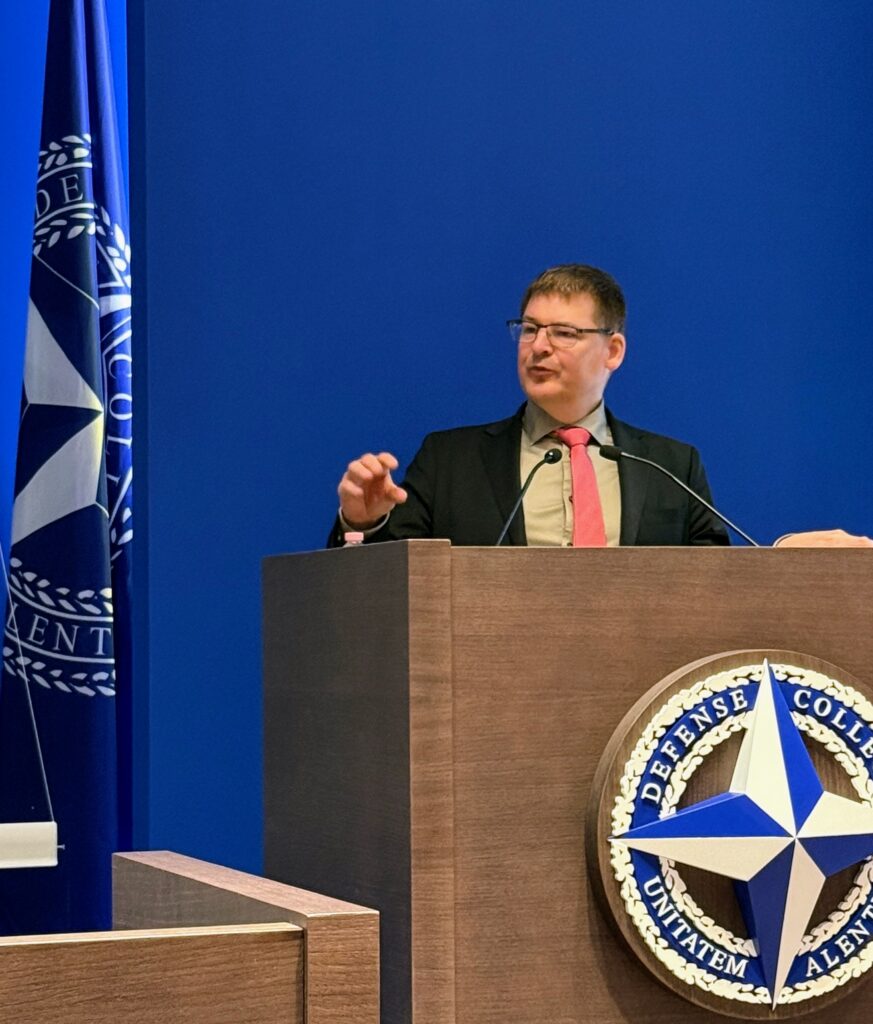
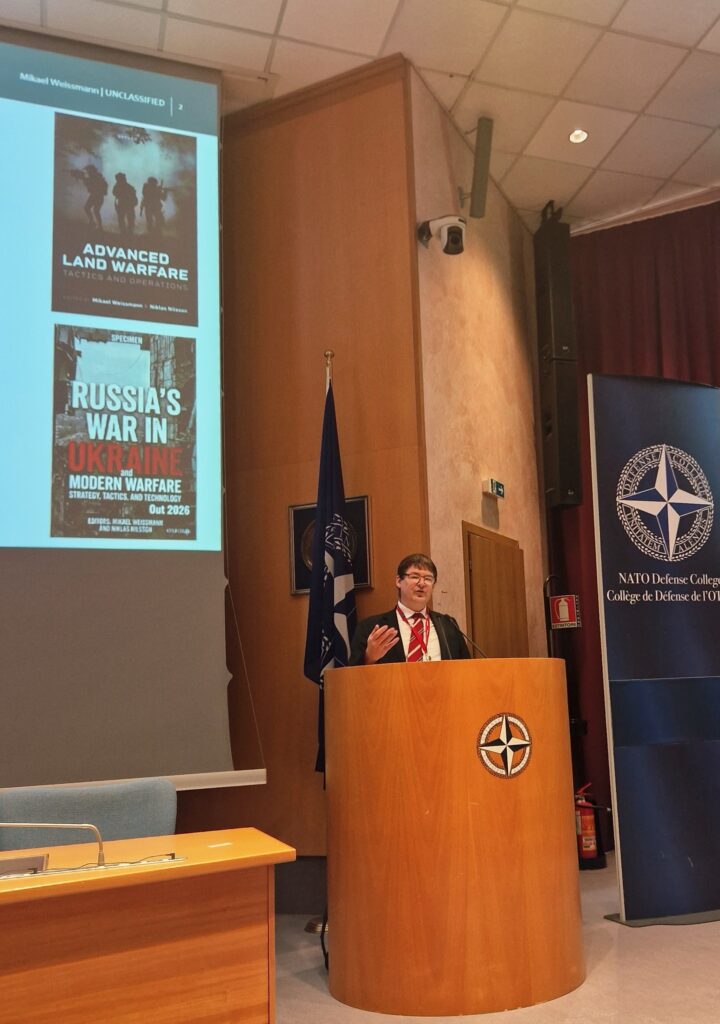
On 18 May 2026, I had the pleasure of giving a lecture at the NATO Defence College in Rome for NATO Senior Course 148 on “The Land Domain: The changing character of war and trends in the land warfighting domain.”

The lecture focused on key trends in contemporary land warfare, including the return of high-intensity industrial war, the increasing transparency of the battlefield, the growing role of drones and artillery, multi-domain pressure on land forces, electronic warfare, urban warfare, and the implications of adversaries disregarding the law of armed conflict and international humanitarian law.

I also discussed emerging developments in land-domain technology and tactics, including UAS, electronic warfare, armour adaptation, robotics, AI-enabled decision support, precision fires, digitalisation, and uncrewed ground systems. The lecture concluded with an assessment of NATO’s land warfighting strengths and areas of concern, including readiness, air defence, industrial capacity, MDO implementation, rear-area resilience, and manpower.

Many thanks to the NATO Defence College for the invitation and for a very good discussion.

Expert Workshop on Collaborative AI-Enabled Sensemaking at USC Capital Campus, Washington, DC

On 25–26 February 2026, I had the pleasure of co-hosting the workshop “Collaborative AI-Enabled Sensemaking: Strategic intelligence in an era of hybrid threats, cognitive warfare, and disinformation” together with Mind-Alliance Systems in Washington, DC. The workshop was held at the USC Capital Campus.

Bringing together senior practitioners working on intelligence and security issues, the workshop explored how AI-enabled collaborative analysis can strengthen strategic intelligence in an increasingly complex threat environment shaped by hybrid threats, cognitive warfare, and disinformation.

A central feature of the workshop was the “Frostbite Fracture” scenario, a realistic grey-zone operations exercise involving Russian hybrid threats to Swedish infrastructure. Within this setting, an AI-enabled decision-support prototype called Sentinel was used to stress-test how intelligence is framed, challenged, disseminated, and acted upon at the intelligence–policy nexus.

The workshop provided an excellent opportunity to examine how human expertise and AI-supported analytical tools can be combined to improve shared situational awareness, sensemaking, and decision support under conditions of uncertainty. It also offered a valuable forum for discussion on the future of strategic intelligence and the practical implications of AI for professional analytical work.

Many thanks to David Kamien & Mind-Alliance Systems, to all participants, and to USC Capital Campus for hosting an engaging and timely workshop.

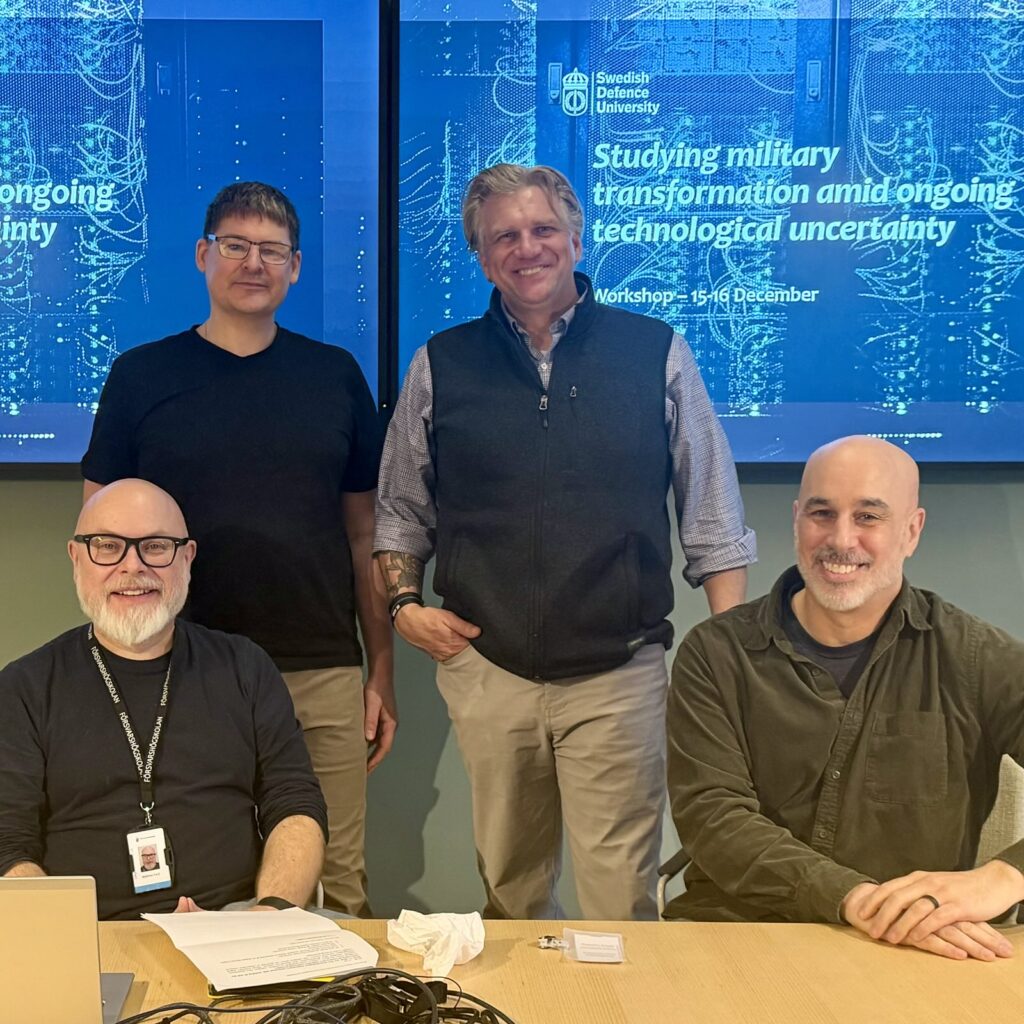
Workshop at the Swedish Defence University – Studying military transformation amid ongoing technological uncertainty (Stockholm, 15–16 December 2025)

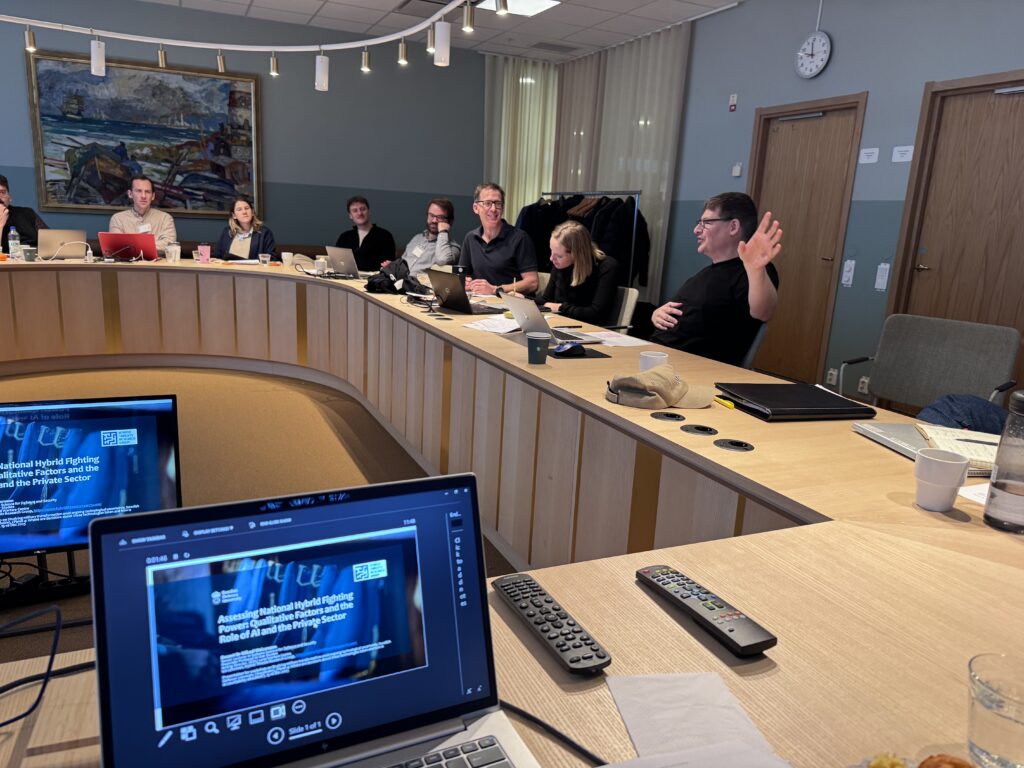
On 15–16 December 2025, I participated in a workshop at the Swedish Defence University on military transformation under conditions of sustained technological uncertainty.

I presented themes from an upcoming article, “Assessing National Hybrid Fighting Power: Qualitative Factors and the Role of AI and the Private Sector” co-authored with Andrew Borne and Doug Livermore.

My presentation was based on a broader framework for assessing fighting power that combines traditional quantitative measures, with a specific focus on the role of public–private collaboration in strengthening these assessments.

Lecture at NATO Defence College: The Changing Character of War

On 25 November 2025, I had the pleasure of giving a lecture at the NATO Defence College in Rome for the NATO Senior Course on “The changing character of war: Trends in the Land Warfighting Domain.”

The lecture addressed strategic trends in modern land warfare, new developments in land-domain techniques and technology, and NATO’s and its member states’ land warfighting capabilities.

Many thanks to the NATO Defence College for the invitation and for a very good discussion.

Conference on Psychological Defence – Lund, October 2025

I attended the Conference on Psychological Defence in Lund, Sweden (14–15 October 2025), hosted by the Psychological Defence Research Institute (PDRI) and the Swedish Psychological Defence Authority.
This year’s theme explored the intersection between research and policy, addressing resilience, threat intelligence, strategic communication, and deterrence in an evolving security landscape.

Read more: Exploring the Intersection of Research and Policy at the Conference on Psychological Defence

Expert Round Table on EU, China, and Central Asia

My presentation, “Resilience by Design: How Central Asia Keeps Agency between Brussels and Beijing without Choosing Sides,” highlighted findings on the hierarchy of needs for post-colonial states and introduced a three-layered model of resilience, developed in collaboration with Dr. Johan Engvall (Swedish Defence Research Agency). I also shared concrete policy recommendations on what Europe should—and should not—do in its approach to Central Asia.

Seminar on Central Asia, Europe and the Nordic Region

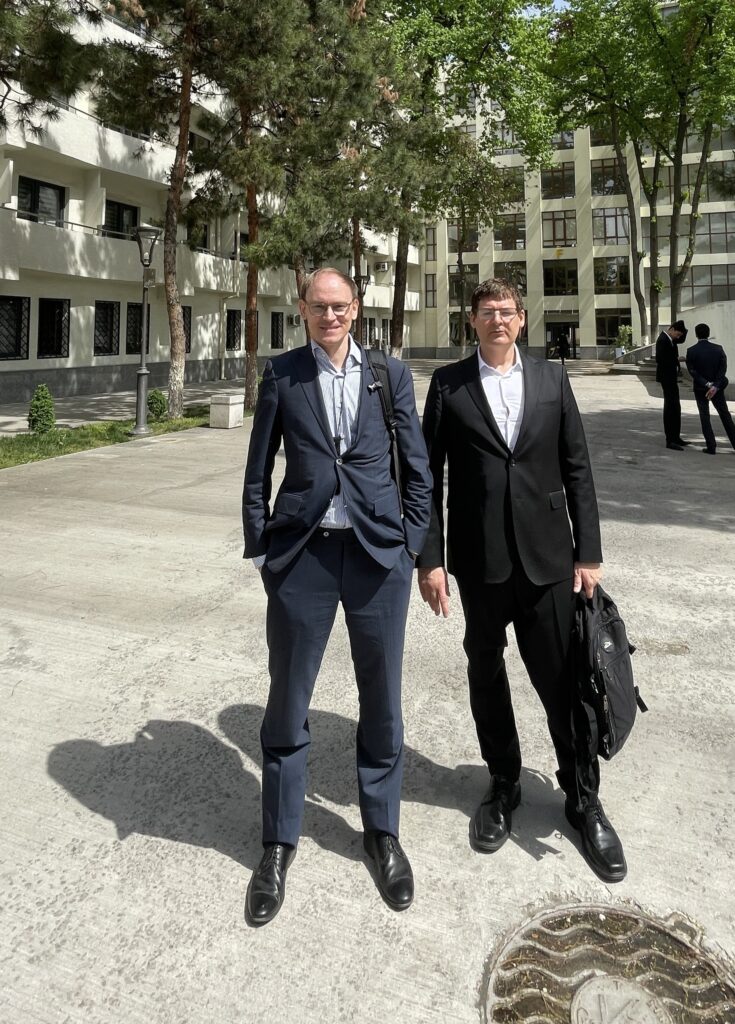
On May 27 I attended a seminar on “Central Asia, Europe and the Nordic Region: Opportunities and Challenges” organised by the Institute for Security & Development Policy.

It was a very productive event, with presentations and discussions between participants from Uzbekistan, Kazakhstan, and Sweden.

Recommended read on the topic by the organisers in The National Interest by Dr Johan Engvall and Dr Svante E. Cornell – How the Nordic Countries Can Engage Central Asia.

Page 1 of 2

Powered by WordPress & Theme by Anders Norén