Hybrid Threats | Psychological Defence | Strategic Intelligence | Technology & Defence | Modern Warfare | Urban Warfare | Staff Rides | Wargames | China and the Indo-Pacific | the Balkans | Central Asia

Tag: Hybrid Threats Page 1 of 2

Expert Workshop on Collaborative AI-Enabled Sensemaking at USC Capital Campus, Washington, DC

On 25–26 February 2026, I had the pleasure of co-hosting the workshop “Collaborative AI-Enabled Sensemaking: Strategic intelligence in an era of hybrid threats, cognitive warfare, and disinformation” together with Mind-Alliance Systems in Washington, DC. The workshop was held at the USC Capital Campus.

Bringing together senior practitioners working on intelligence and security issues, the workshop explored how AI-enabled collaborative analysis can strengthen strategic intelligence in an increasingly complex threat environment shaped by hybrid threats, cognitive warfare, and disinformation.

A central feature of the workshop was the “Frostbite Fracture” scenario, a realistic grey-zone operations exercise involving Russian hybrid threats to Swedish infrastructure. Within this setting, an AI-enabled decision-support prototype called Sentinel was used to stress-test how intelligence is framed, challenged, disseminated, and acted upon at the intelligence–policy nexus.

The workshop provided an excellent opportunity to examine how human expertise and AI-supported analytical tools can be combined to improve shared situational awareness, sensemaking, and decision support under conditions of uncertainty. It also offered a valuable forum for discussion on the future of strategic intelligence and the practical implications of AI for professional analytical work.

Many thanks to David Kamien & Mind-Alliance Systems, to all participants, and to USC Capital Campus for hosting an engaging and timely workshop.
Visiting Researcher from RSIS, Singapore 13-16 January, 2026

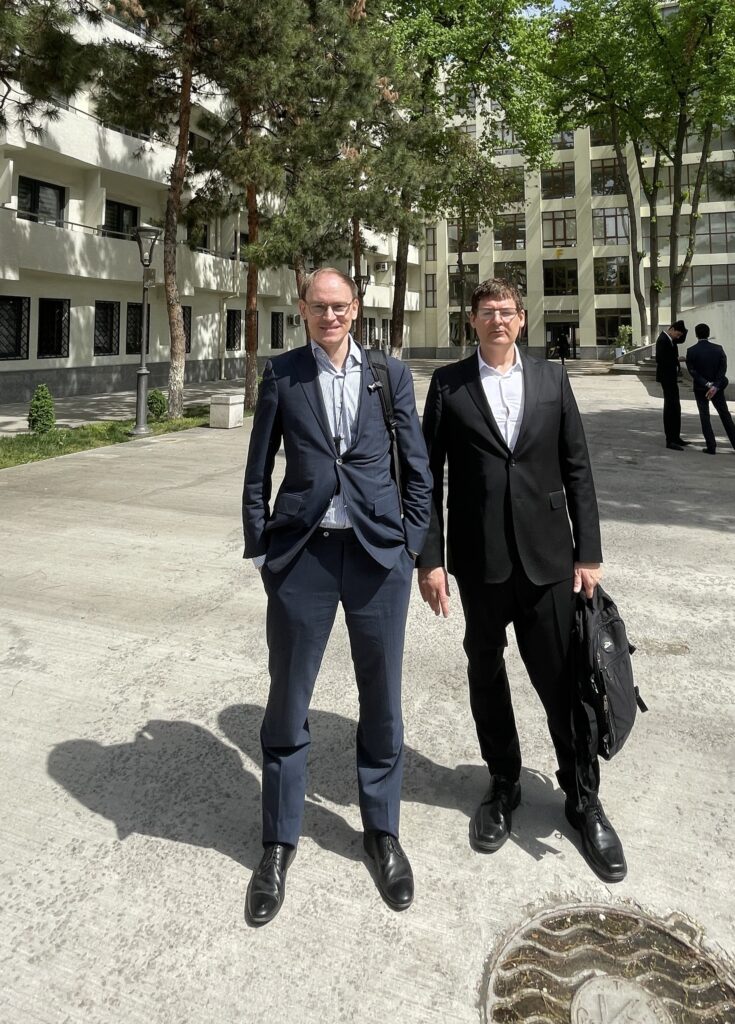
Dr Ong Weichong, National Security Studies Programme at the S. Rajaratnam School of International Studies (RSIS), Nanyang Technological University, Singapore, visited the Department of Systems Science for Defence and Security at the Swedish Defence University on 13–16 January 2026.

During his visit, Dr Ong engaged in discussions and collaboration with researchers from the Hybrid Threats Research Group, as well as within the project Building Resilience and Psychological Defence: Countering Hybrid Threats and Foreign Influence and Interference. Discussions were also held regarding future collaboration on staff rides and forthcoming courses.

The visit was characterised by insightful and constructive discussions, knowledge exchange, and meetings with Swedish stakeholders, contributing to strengthened international research collaboration in the field of security and defence.

New publication: Hybrid Threats, Cognitive Warfare, and Psychological Defence

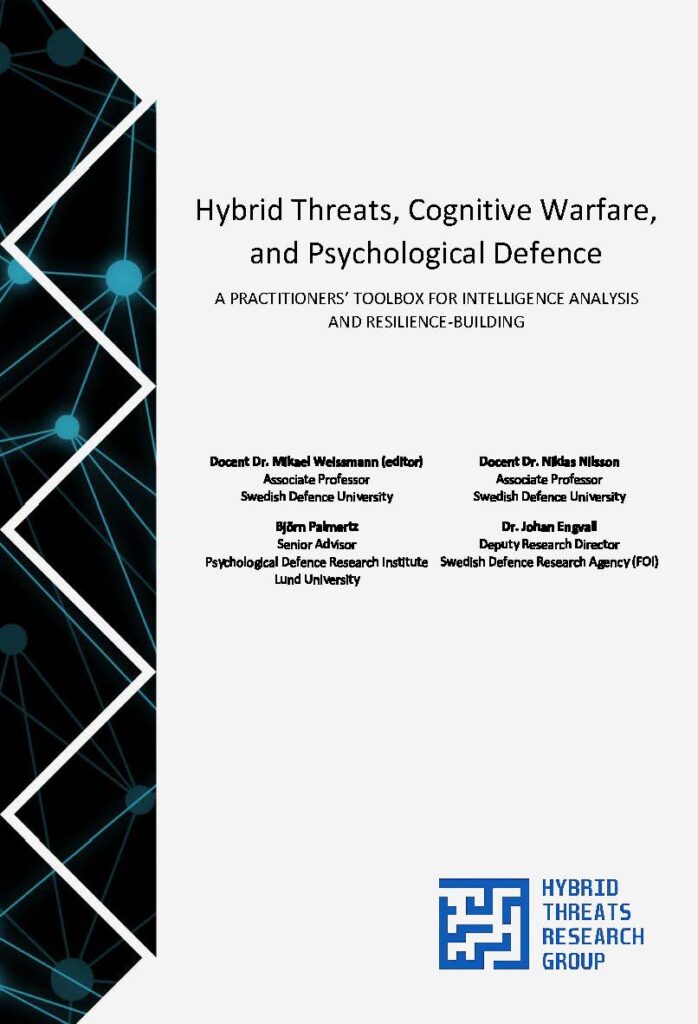
A new practitioners’ toolbox, Hybrid Threats, Cognitive Warfare, and Psychological Defence, has been published by the Hybrid Threats Research Group.

The toolbox consolidates key practitioner takeaways from five publications into a single, coherent framework for countering hybrid threats and cognitive warfare and for strengthening psychological defence and societal resilience. It links short-term threat–response cycles with long-term resilience-building and operationalises national-level psychological defence in a ready-to-use format.

The publication integrates three complementary analytical tools:

  • The hybridity blizzard model, illustrating how an aggressor’s targeting of vulnerabilities interacts with defensive responses over time and situating intelligence at the interface between detection, countermeasures, and resilience-building.
  • The intelligence analysis interaction (hourglass) model, capturing the coupled processes of analysis, aggregated and tailored communication, and reception and absorption among societal actors.
  • The assess–address–evaluate (AAE) framework, a six-dimensional structure guiding analysis, action, and learning for psychological defence and resilience.

Together, these tools provide practitioners with a practical workflow for diagnosing hybrid activity, improving intelligence interactions, and strengthening resilience through a coordinated whole-of-society approach.

Conference on Psychological Defence – Lund, October 2025

I attended the Conference on Psychological Defence in Lund, Sweden (14–15 October 2025), hosted by the Psychological Defence Research Institute (PDRI) and the Swedish Psychological Defence Authority.
This year’s theme explored the intersection between research and policy, addressing resilience, threat intelligence, strategic communication, and deterrence in an evolving security landscape.

Read more: Exploring the Intersection of Research and Policy at the Conference on Psychological Defence

Expert Round Table on EU, China, and Central Asia

My presentation, “Resilience by Design: How Central Asia Keeps Agency between Brussels and Beijing without Choosing Sides,” highlighted findings on the hierarchy of needs for post-colonial states and introduced a three-layered model of resilience, developed in collaboration with Dr. Johan Engvall (Swedish Defence Research Agency). I also shared concrete policy recommendations on what Europe should—and should not—do in its approach to Central Asia.

Launching new website for the Hybrid Threat Resaerch Group (HTRG) – hybridthreatsresearch.com

The Hybrid Threats Research Group is an interdisciplinary initiative based at the Swedish Defence University, linking scholars and practitioners from political science, strategic communication, war and defence studies, cybersecurity, influence operations, intelligence, and area studies. Our mission is to advance the capacity to identify, analyse and respond to hybrid threats—where conventional and unconventional tactics converge to test social, political and technological resilience.

Guided by a steering group, and supported by a worldwide network of affiliates, we foster international collaboration to build knowledge that supports governments and key societal actors.

Our research focuses on five interconnected themes:

  1. Modern Warfare – examining how technological change reshapes conflict and defence strategy.
  2. Hybrid Threats – exploring the blended tactics of state and non-state actors that erode traditional defence mechanisms.
  3. Strategic Intelligence – strengthening the collection, analysis and application of intelligence to anticipate threats.
  4. Psychological Defence – building societal resilience against disinformation and influence operations across peace, crisis and war.
  5. Defence Systems – bridging social science and engineering to integrate technical and human factors in effective defence solutions.

Through targeted research projects, workshops and seminars, HTRG provides a creative environment for research training, professional development and evidence-based policy advice. We welcome collaboration with academia, government, and industry partners committed to understanding and countering the complex security challenges of today’s interconnected world.

The new website can be found here: https://www.hybridthreatsresearch.com

New publication: Future Threat Landscapes: The Impact on Intelligence and Security Services

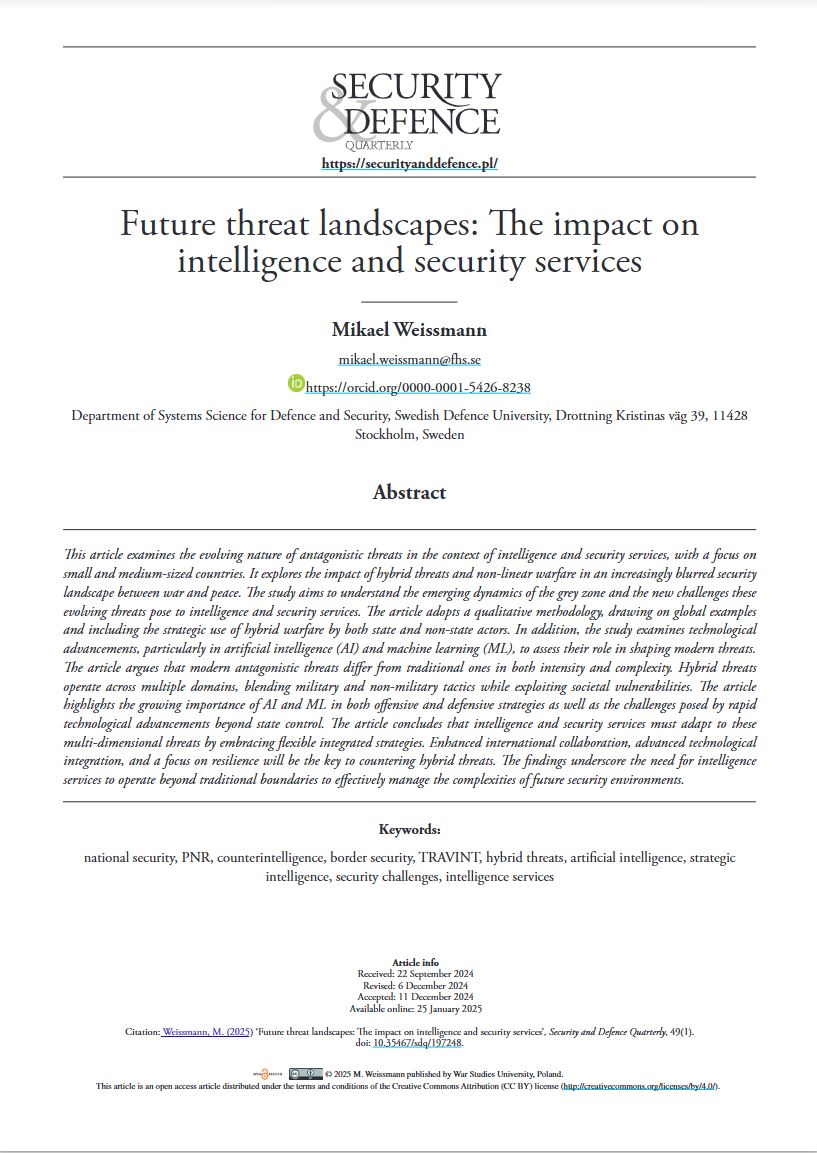
My latest article, “Future Threat Landscapes: The Impact on Intelligence and Security Services”, is now published in Security & Defence Quarterly!
This article examines the evolving nature of antagonistic threats in the context of intelligence and security services, with a focus on small and medium-sized countries. In an era where the line between war and peace is increasingly blurred, intelligence and security services face a rapidly evolving threat environment.

This article examines:

  • The rise of hybrid threats and non-linear warfare
  • The strategic role of AI and machine learning in modern security
  • How intelligence services must adapt to meet multi-domain challenges

As technology and geopolitics shift, resilience, adaptability, and international cooperation will be key to navigating these uncertainties.

Read the full article here: https://doi.org/10.35467/sdq/197248

#SecurityStudies #HybridThreats #Intelligence #AI #Defence #CyberSecurity #NationalSecurity

New Publication: Hybrid Threats and the Intelligence Community

I am pleased to share our latest article, “Hybrid Threats and the Intelligence Community: Priming for a Volatile Age,” in International Journal for Intelligence and CounterIntelligence co-authored with Niklas Nilsson and Björn Palmertz.

In today’s complex security environment, the intelligence community must address dynamic hybrid threats through coordinated efforts that span multiple sectors. Our research emphasizes the critical interaction between intelligence analysis, communication, and societal resilience.

Key points include:
• The necessity of reciprocal engagement between intelligence actors and key societal stakeholders.
• An introduction of the Intelligence Analysis Interaction Model, which offers a framework for understanding how hybrid threats evolve and for fostering resilience across society.
• Recommendations on developing tools to identify vulnerabilities, build resilience, and formulate comprehensive whole-of-society responses to hybrid threats.

The full article can be accessed here: https://doi.org/10.1080/08850607.2024.2435265

New report on North Macedonia’s Response to Hybrid Threats and Malign Foreign Influence and Interference

I am excited to announce that our research project on “Building Resilience and Psychological Defence: Countering Hybrid Threats and Foreign Influence and Interference,” has just published a new report on North Macedonia’s Response to Hybrid Threats and Malign Foreign Influence and Interference in the Psychological Defence Research Institute‘s working paper series. It is authored by Professor Zhidas Daskalovski and Sasho Damjanovski from the Faculty of Security-Skopje, University St. Kliment Ohridski-Bitola, North Macedonia.

This report underscores the urgent need for resilience against hybrid threats in North Macedonia, especially as global security dynamics shift following the Russian military intervention in Ukraine. Utilizing our previously published framework, it offers in-depth analysis and proposes countermeasures through a holistic approach. Notably, it highlights societal polarization in the Western Balkans and how the intersecting interests of major powers heighten vulnerabilities to foreign interference.

Proud to Announce My Participation at the Zagreb Security Forum 2024

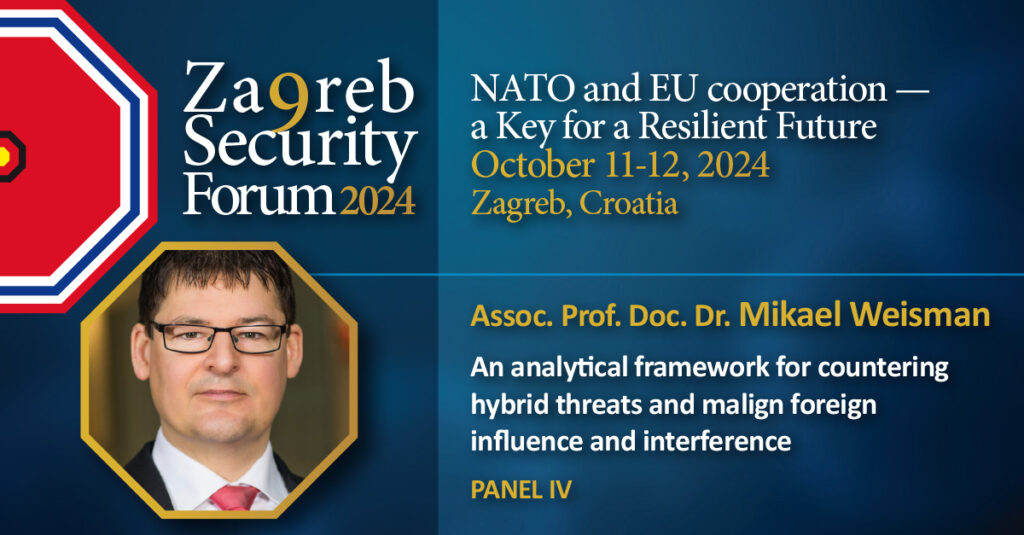
 I am honored to share that I will be participating as a panelist at the Zagreb Security Forum 2024 in Zagreb, Croatia 🇭🇷 on October 11-12, 2024.

I will be presenting on “An Analytical Framework for Countering Hybrid Threats and Malign Foreign Influence and Interference: Building Psychological Defence and Resilience for the Threats of Today and Tomorrow” This framework was developed together with Björn Palmertz, Niklas Nilsson, and Johan Engvall. You can read our full report here: psychologicaldefence.lu.se/report

Looking forward to engaging discussions and valuable exchanges with esteemed colleagues and experts from around the world.

For detailed information on the program and speakers, please visit: zagrebsecurityforum.com/Program

Page 1 of 2

Powered by WordPress & Theme by Anders Norén