Hybrid Threats | Psychological Defence | Strategic Intelligence | Technology & Defence | Modern Warfare | Urban Warfare | Staff Rides | Wargames | China and the Indo-Pacific | the Balkans | Central Asia

Tag: National Security

Visiting Researcher from RSIS, Singapore 13-16 January, 2026

Dr Ong Weichong, National Security Studies Programme at the S. Rajaratnam School of International Studies (RSIS), Nanyang Technological University, Singapore, visited the Department of Systems Science for Defence and Security at the Swedish Defence University on 13–16 January 2026.

During his visit, Dr Ong engaged in discussions and collaboration with researchers from the Hybrid Threats Research Group, as well as within the project Building Resilience and Psychological Defence: Countering Hybrid Threats and Foreign Influence and Interference. Discussions were also held regarding future collaboration on staff rides and forthcoming courses.

The visit was characterised by insightful and constructive discussions, knowledge exchange, and meetings with Swedish stakeholders, contributing to strengthened international research collaboration in the field of security and defence.
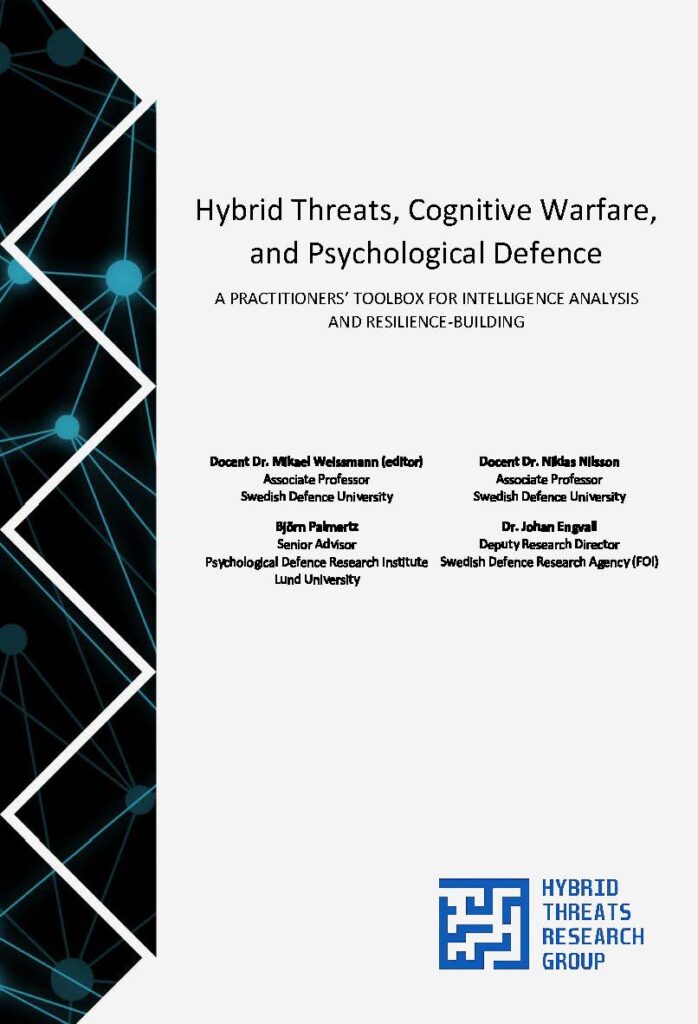
New publication: Hybrid Threats, Cognitive Warfare, and Psychological Defence

A new practitioners’ toolbox, Hybrid Threats, Cognitive Warfare, and Psychological Defence, has been published by the Hybrid Threats Research Group.

The toolbox consolidates key practitioner takeaways from five publications into a single, coherent framework for countering hybrid threats and cognitive warfare and for strengthening psychological defence and societal resilience. It links short-term threat–response cycles with long-term resilience-building and operationalises national-level psychological defence in a ready-to-use format.

The publication integrates three complementary analytical tools:

  • The hybridity blizzard model, illustrating how an aggressor’s targeting of vulnerabilities interacts with defensive responses over time and situating intelligence at the interface between detection, countermeasures, and resilience-building.
  • The intelligence analysis interaction (hourglass) model, capturing the coupled processes of analysis, aggregated and tailored communication, and reception and absorption among societal actors.
  • The assess–address–evaluate (AAE) framework, a six-dimensional structure guiding analysis, action, and learning for psychological defence and resilience.

Together, these tools provide practitioners with a practical workflow for diagnosing hybrid activity, improving intelligence interactions, and strengthening resilience through a coordinated whole-of-society approach.

Conference on Psychological Defence – Lund, October 2025

I attended the Conference on Psychological Defence in Lund, Sweden (14–15 October 2025), hosted by the Psychological Defence Research Institute (PDRI) and the Swedish Psychological Defence Authority.
This year’s theme explored the intersection between research and policy, addressing resilience, threat intelligence, strategic communication, and deterrence in an evolving security landscape.

Read more: Exploring the Intersection of Research and Policy at the Conference on Psychological Defence

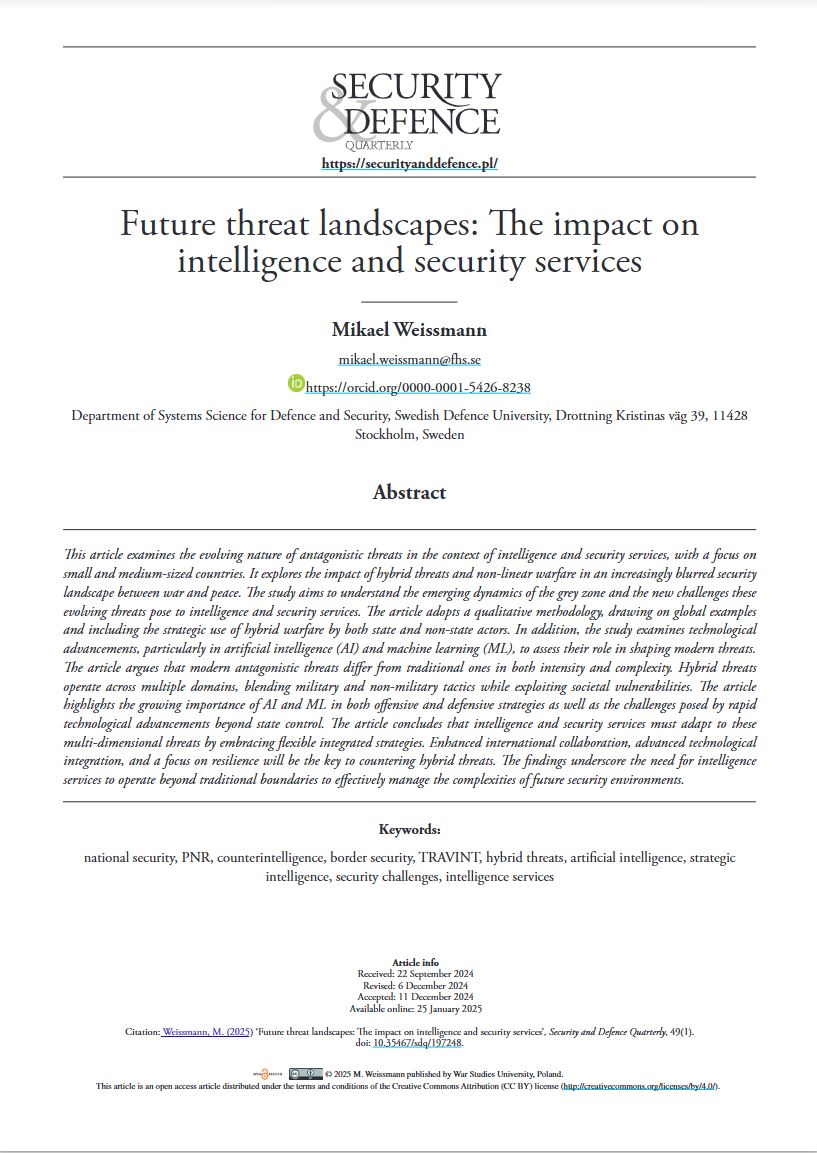
New publication: Future Threat Landscapes: The Impact on Intelligence and Security Services

My latest article, “Future Threat Landscapes: The Impact on Intelligence and Security Services”, is now published in Security & Defence Quarterly!
This article examines the evolving nature of antagonistic threats in the context of intelligence and security services, with a focus on small and medium-sized countries. In an era where the line between war and peace is increasingly blurred, intelligence and security services face a rapidly evolving threat environment.

This article examines:

  • The rise of hybrid threats and non-linear warfare
  • The strategic role of AI and machine learning in modern security
  • How intelligence services must adapt to meet multi-domain challenges

As technology and geopolitics shift, resilience, adaptability, and international cooperation will be key to navigating these uncertainties.

Read the full article here: https://doi.org/10.35467/sdq/197248

#SecurityStudies #HybridThreats #Intelligence #AI #Defence #CyberSecurity #NationalSecurity

Powered by WordPress & Theme by Anders Norén