Hybrid Threats | Psychological Defence | Strategic Intelligence | Technology & Defence | Modern Warfare | Urban Warfare | Staff Rides | Wargames | China and the Indo-Pacific | the Balkans | Central Asia

Tag: strategic intelligence

Expert Workshop on Collaborative AI-Enabled Sensemaking at USC Capital Campus, Washington, DC

On 25–26 February 2026, I had the pleasure of co-hosting the workshop “Collaborative AI-Enabled Sensemaking: Strategic intelligence in an era of hybrid threats, cognitive warfare, and disinformation” together with Mind-Alliance Systems in Washington, DC. The workshop was held at the USC Capital Campus.

Bringing together senior practitioners working on intelligence and security issues, the workshop explored how AI-enabled collaborative analysis can strengthen strategic intelligence in an increasingly complex threat environment shaped by hybrid threats, cognitive warfare, and disinformation.

A central feature of the workshop was the “Frostbite Fracture” scenario, a realistic grey-zone operations exercise involving Russian hybrid threats to Swedish infrastructure. Within this setting, an AI-enabled decision-support prototype called Sentinel was used to stress-test how intelligence is framed, challenged, disseminated, and acted upon at the intelligence–policy nexus.

The workshop provided an excellent opportunity to examine how human expertise and AI-supported analytical tools can be combined to improve shared situational awareness, sensemaking, and decision support under conditions of uncertainty. It also offered a valuable forum for discussion on the future of strategic intelligence and the practical implications of AI for professional analytical work.

Many thanks to David Kamien & Mind-Alliance Systems, to all participants, and to USC Capital Campus for hosting an engaging and timely workshop.

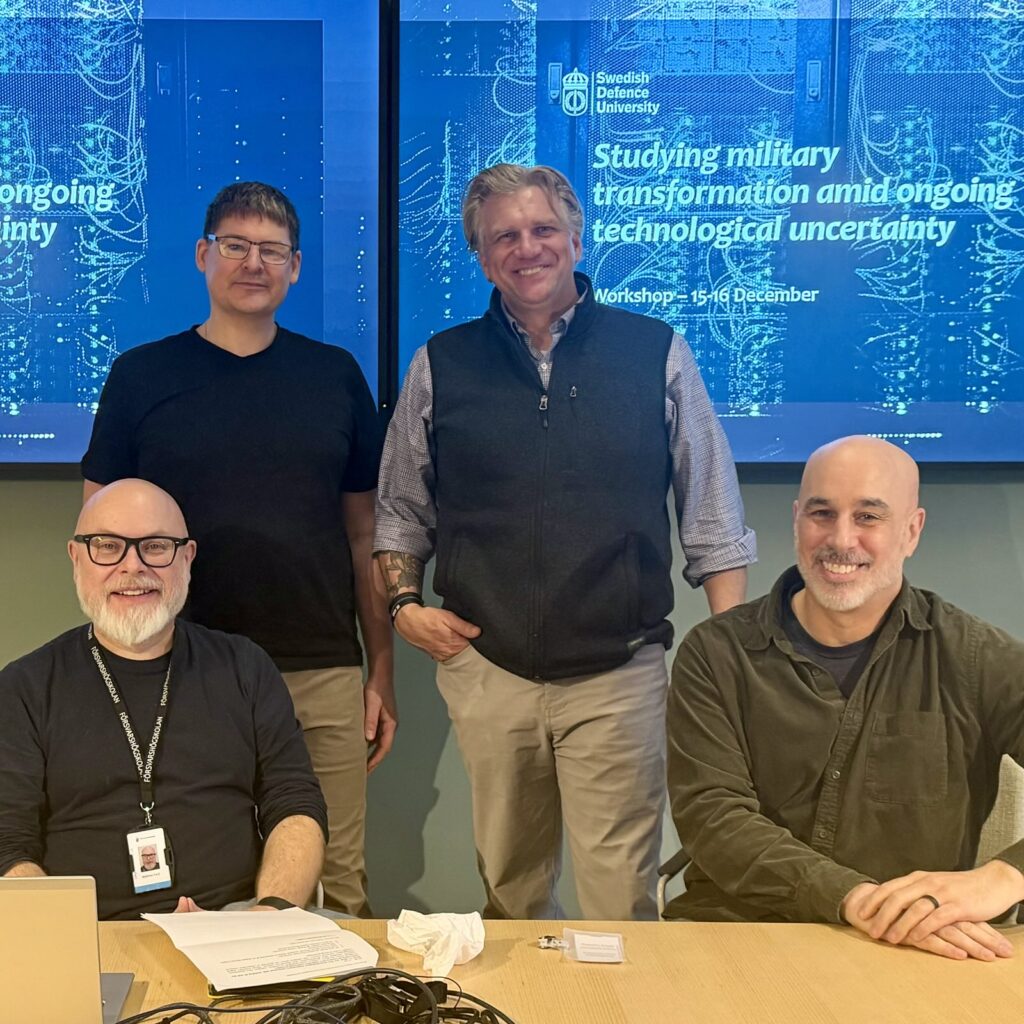
Workshop at the Swedish Defence University – Studying military transformation amid ongoing technological uncertainty (Stockholm, 15–16 December 2025)

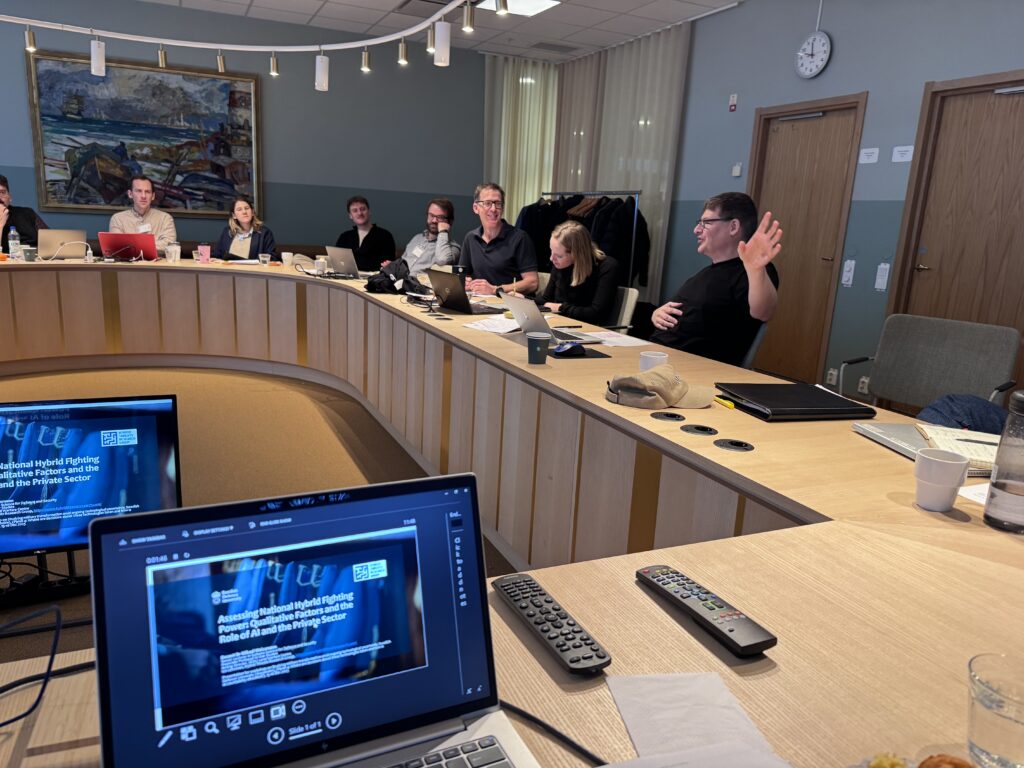
On 15–16 December 2025, I participated in a workshop at the Swedish Defence University on military transformation under conditions of sustained technological uncertainty.

I presented themes from an upcoming article, “Assessing National Hybrid Fighting Power: Qualitative Factors and the Role of AI and the Private Sector co-authored with Andrew Borne and Doug Livermore.

My presentation was based on a broader framework for assessing fighting power that combines traditional quantitative measures, with a specific focus on the role of public–private collaboration in strengthening these assessments.

Powered by WordPress & Theme by Anders Norén