Hybrid Threats | Psychological Defence | Strategic Intelligence | Technology & Defence | Modern Warfare | Urban Warfare | Staff Rides | Wargames | China and the Indo-Pacific | the Balkans | Central Asia
The Swedish Defence University’s Centre for Land Warfare has launched its new website.
The Centre is a collaborative knowledge hub connecting academic research, military practice, education and capability development across the land domain. It brings together expertise from the Swedish Defence University, the Swedish Armed Forces and external partners.
As Deputy Director of the Centre, I contribute to developing this environment for research, education and collaboration on contemporary and future land warfare.
The new website presents our research areas, current projects and initiatives, publications, and opportunities for collaboration.
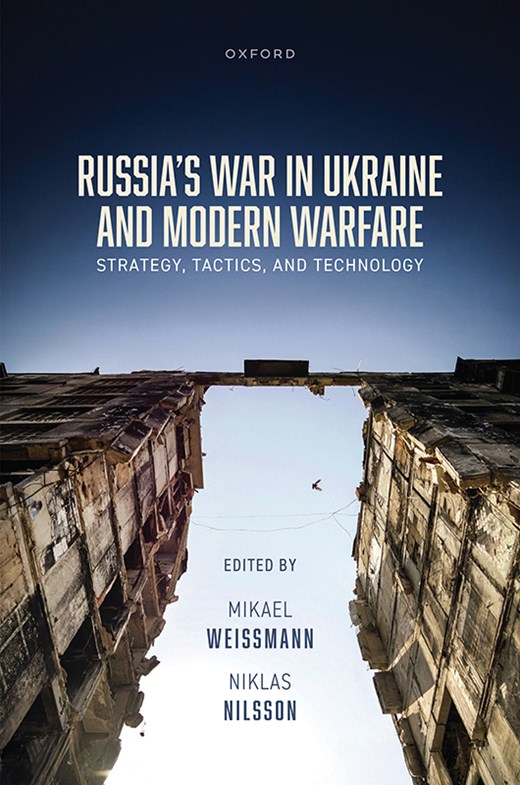
I am delighted to announce the publication of Russia’s War in Ukraine and Modern Warfare: Strategy, Tactics, and Technology, co-edited with Dr Niklas Nilsson and published by Oxford University Press.
Russia’s war in Ukraine is a defining conflict of our time and a watershed in the evolution of modern warfare. It has challenged established assumptions about how wars are fought, sustained, commanded and understood. Our new volume brings together leading scholars and practitioners to examine what the war reveals about both the enduring nature and changing character of warfare.
The book combines thematic analysis with detailed case studies. Its chapters examine:
manoeuvre warfare and urban warfare;
mission command and command and control;
military logistics and health services;
air and maritime warfare;
force generation and military training;
intelligence collection and sharing;
drones and other emerging technologies;
military learning and adaptation;
gender and the Ukrainian armed forces; and
key phases of the war between 2014 and 2025.
The volume is structured around four parts: dimensions of modern warfare; organisation, technology and training; chronological case studies; and a concluding assessment of the wider lessons of the war.
In addition to co-editing the volume, I co-authored three chapters:
The print paperback edition will be published on 30 August 2026 and can be ordered from Oxford University Press.
Reference
Weissmann, Mikael and Niklas Nilsson, eds. Russia’s War in Ukraine and Modern Warfare: Strategy, Tactics, and Technology. Oxford: Oxford University Press, 2026. https://doi.org/10.1093/9780198970903.001.0001
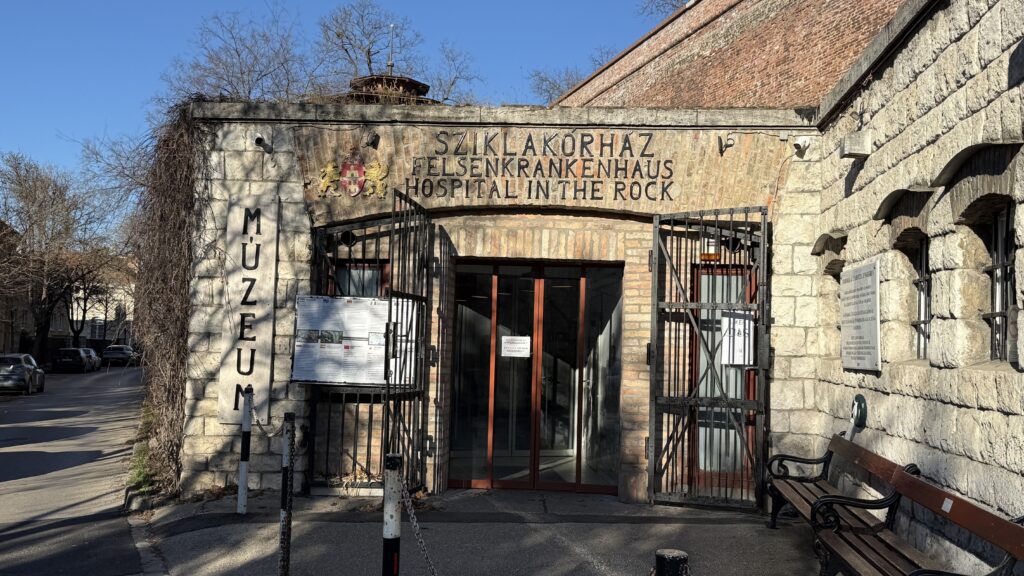
From 28–31 December 28–31, 2025, I conducted a field study in Budapest, focusing on urban warfare, military innovation, and the practical application of AI as a support tool for planning and conducting staff rides. The main historical anchor was the Siege of Budapest (1944 – 1945), using the city’s terrain and key sites to examine the realities of fighting in a major capital: constrained mobility, contested infrastructure, sustainment under pressure, and the constant tension between operational intent and street-level friction. I also briefly compared these lessons with the Hungarian Revolution of 1956 to highlight how rapidly urban dynamics can shift when legitimacy, information, and political control become central.
Alongside the historical cases, I conducted a pilot study on responsible ways of integrating AI into the planning and execution of staff rides—working with a range of sources including battlefield guides to structure the staff ride design (aims, stands, themes, and learning activities) and develop teaching tools that translate historical insights into focused questions and practical discussion prompts, while keeping human judgement and source criticism firmly in the loop. I also explored the possibility of using tailored “technique cards” at specific stands to cue observation, guide discussion, and support reflection during a staff ride.
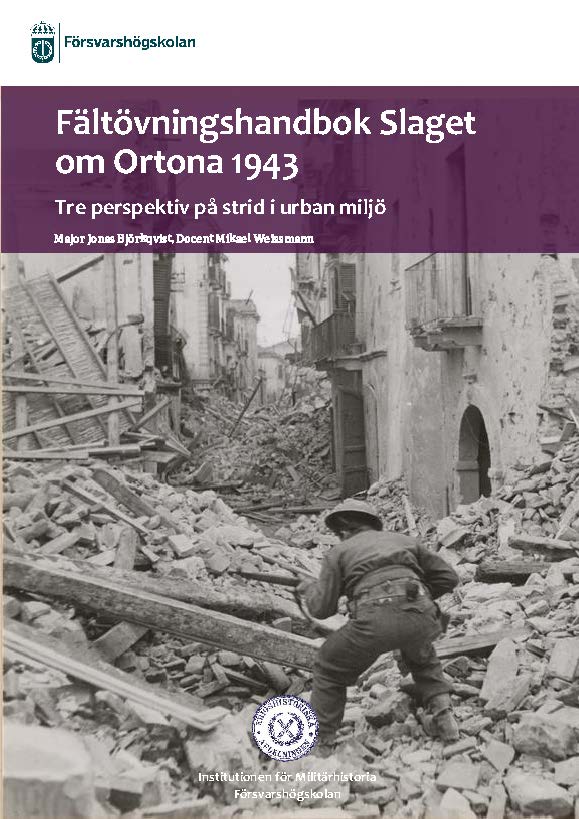
By Major Jonas Björkqvist & Docent Dr Mikael Weissmann Swedish Defence University Report Series 2025:6 DOWNLOAD | Open Access
This new handbook presents a comprehensive framework for conducting staff rides and field exercises on the Battle of Ortona (1943)—a historical case offering vital lessons for modern urban warfare. Combining history, wargaming, and pedagogy, it introduces a hybrid model linking tactical and operational insights from past battles with today’s and tomorrow’s conflicts.
Designed for Professional Military Education (PME), it provides practical guidance, thematic modules, and an integrated card-driven wargame to strengthen decision-making and leadership in complex urban operations.
From 10-12 September, the Swedish Defence University is hosting the International Society of Military Sciences (ISMS) Annual Conference 2024, with the theme “Scaling up, Learning Lessons, Ensuring Quality.”
I am excited to present Major Jonas Björkqvist and my own on “From the Battlefield to Classroom: Incorporating War Games and Staff Rides in Professional Military Education (PME) to Enhance Urban Combat Preparedness.“
This presentation focuses on integrating war games and staff rides into military education, both in general and in relation to improving preparedness for urban combat scenarios. I am looking forward to engaging with fellow experts and sharing innovative ideas during the conference.
From 10-12 September, the Swedish Defence University is hosting the International Society of Military Sciences (ISMS) Annual Conference 2024, with the theme “Scaling up, Learning Lessons, Ensuring Quality.”
This presentation explores critical lessons from the Ukraine conflict and proposes strategic insights to rethink urban warfare in the light of Russia’s war in Ukraine.
I look forward to discussing these findings and contributing to the broader conversation on war studies, operations and tactics during the conference.
I am co-chairing WG 1: War Studies, Operations and Tactics with LtCol Dr Lars Henåker. The program contains a range of interesting papers and presentations on the themes WAR IN UKRAINE, OPERATIONAL ARTS AND STRATEGY, INFORMATION SPACE AND THE COGNITIVE FRONTIERS OF WARFARE, and HYBRID/PRIVATE/AI. Conference Program
I am presenting three papers:
“Reevaluating Urban Warfare: Lessons and Strategies from the Ukraine Conflict” co-authored with Prof. Douglas W. Wintonof the Dwight D. David Eisenhower School for National Security and Resource Strategy, National Defense University, US.
“From Battlefield to Classroom: Incorporating War Games and Staff Rides in Professional Military Education (PME) to enhance Urban Combat preparedness” co-authored with Major Jonas Björkqvist of the Land Operations Division, Department of War Studies, Swedish Defence University
On 3-7 January 2024 Major Jonas Björkqvist (Land Operations Division) and I conducted a tentative field study studying the Battle of Ortona 1943 and Orsogna, Villa Rogatti och Sterlin Castle. The aim is to enhance the inclusion of urban warfare in our teaching, staff ride & wargame repertoire. The study is part of curriculum development projects for the Swedish Officers Program and the Joing Higher Command and Staff program.
We are now working on a staff ride field guide with the title The Battle of Ortona: Four Perspectives on operations in urban terrain to be published later this year.
Major Björkqvist is also developing a new card-driven map-based war game on the Battle of Ortona to be used in connection with future staff ride to Ortona as part of Professional Military Education (PME) with a focus in particular on officer cadets and senior officers.
Zeroes in on the evolving role of land forces, focusing particularly on the changes that have taken place in the art of commanding and executing combat and on the role of rapid technological innovation and information dissemination in shaping warfare
Revisits established military theory and thinking (some of it neglected in recent years) with lessons learned from contemporary land warfare
Provides various perspectives on key contemporary developments in land warfare, while also presenting case studies on land tactics and operations in different national contexts
Draws on the knowledge and insights of leading scholars of war and senior officers to provide a current understanding of the central issues of land warfare
Explores how land forces remain a crucial feature of warfare as evidenced by recent wars in Ukraine, Syria, Mali, Yemen and Nagorno-Karabak
Table of Contents
Foreword, Dr Meir Finkel
1:Approaching Land Warfare in the 21st Century, Dr Niklas Nilsson and Dr Mikael Weissmann Part 1: Land Warfare
2:The Future of Manoeuvre Warfare, Dr Christopher Tuck
3:Commanding Contemporary and Future Land Operations: What Role for Mission Command?, Dr Niklas Nilsson
4:Combat Logistics in the 21st Century: Enabling the mobility, endurance, and sustainment of NATO land forces in a future major conflict, Dr Christopher Kinsey and Colonel Ronald Ti
5:The Command of Land Forces, Jim Storr
6:Tactical Tenets: Checklists or Toolboxes, BA Friedman and Henrik Paulsson
7:Urban Warfare: Challenges of Military Operations on Tomorrow’s Battlefield, Dr Mikael Weissmann
8:Emerging Technologies: From Concept to Capability, Dr Jack Watling
9:Interoperability Challenges in an era of Systemic Competition, Air Commodore (Rtd) Andrew Curtis
10:The moral component of fighting: Bringing society back in, Dr Tua Sandman
11:Military Health Services supporting the Land Component in the 21st Century, Gen (Rtd) Professor Martin CM Bricknell Part 2: Case studies
12:The Operational Cultures of American Ground Forces, Dr Bruce I. Gudmundsson
13:1. People’s Liberation Army Operations and Tactics in the Land Domain: Informationized to Intelligentized Warfare, Brad Marvel
14:A Strategy of Limited Actions: Russia’s Ground-Based Forces in Syria, Dr Markus Balázs Göransson
15:The Role of Israel’s Ground Forces in Israel’s Wars, Dr Eado Hechet and Dr Eitan Shamir
16:Tactics and Trade-Offs: The Evolution of Manoeuvre in the British Army, Dr Alex Neads and Professor David J. Galbreath
17:Caught between a rock and a hard place: the French army, expeditionary warfare and the return of strategic competition, Dr Olivier Schmitt and Dr Elie Tenenbaum
18:Trends in the Land Warfare Capability of Poland and the Visegrad States, 1991-2021, Scott Boston Conclusions
19:Towards a versatile edge: Developing land forces for future conflict, Dr Mikael Weissmann and Dr Niklas Nilsson
During 1-4 March I conducted a staff ride in the Netherlands with a focus on urban combat and resistance under occupation together with Patrik Wiklund from the Military History Division of the Swedish Defence University. Special focus was put on the Battle of Nijmegen and the Battle of Arnhem in September 1944 and the experiences of German occupation in Amsterdam during the second world war.
We also visit Eben-Emael and Grebbeberg to discuss innovation and creativity in war, the importance of willingness to fight and the role of history and war games in PME.